

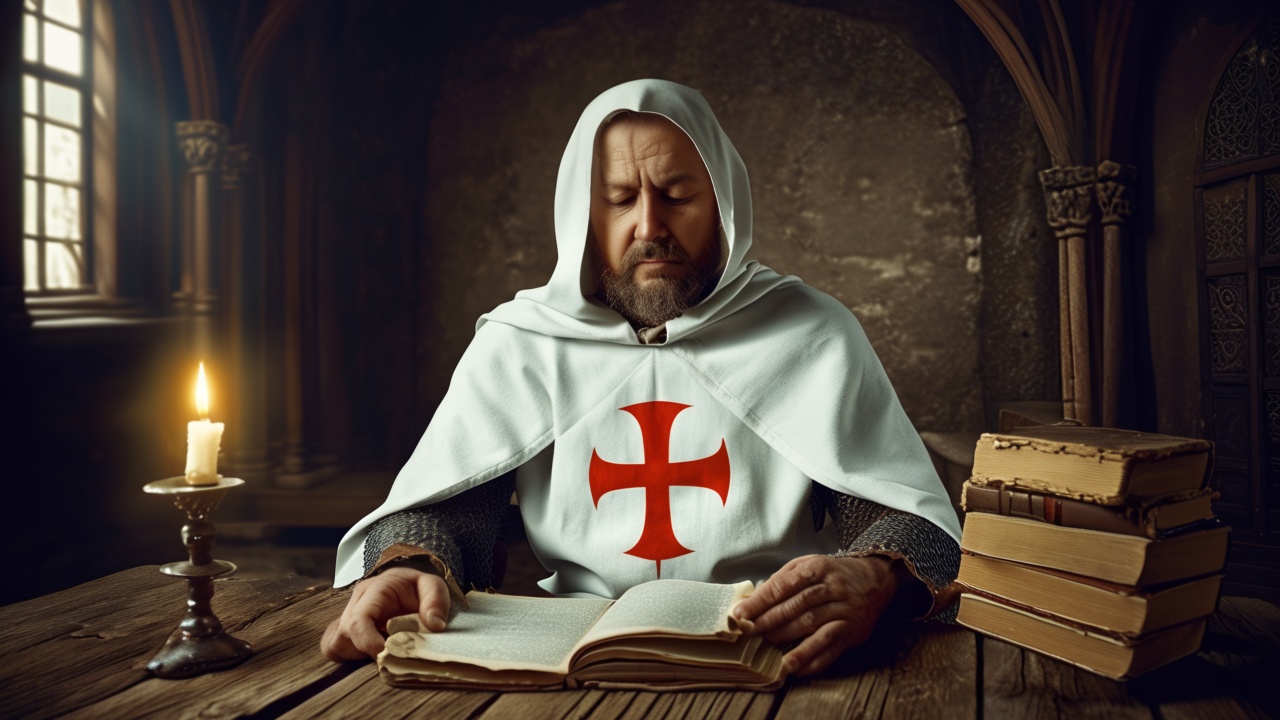
The so-called Primitive Rule of the Knights Templar laid out all the rules and regulations that would govern the daily life of these holy warriors. It was a combination of prayer and military drills. This was a tough, spartan life for the young men who joined the order.
The author of the Templar Rule was first grand master: Hugh (or Hugues) de Payens (or Payns). But he was either guided or actively assisted by Bernard of Clairvaux, a prominent Cistercian abbot who was an early cheerleader for the Templars.
So – what did the Templar Rule state?
The Rule covered all aspects of daily life, including clothing, meals, sleeping arrangements, and social restrictions. It showed a clear understanding of all the various temptations and weaknesses that young men were likely to display. I hardly need to tell you what those are!
DISCOVER: Templar prosecutor Enguerrand de Marigny
The knights were governed by the monastic rule of the Cistercians and, before them, the Benedictines. This could be summed up in three words: poverty, chastity, and obedience. Like any modern cult, the members were to have no personal possessions or loyalties outside of the organisation. Nothing should distract from their commitment to the order and its leadership and aims.
Even though the Templars were not monks or priests, they observed the rule of chastity. There was to be no relationship with women of any description – including female family members. Templars discovered to be married were expelled. Correspondence with mothers or sisters was read first by senior officials. And even the urge to masturbate was addressed by forcing knights to sleep wearing their non-armour garments and with the room illuminated by candlelight.
Simplicity in dress was enforced by the Draper. This individual ensured that Templars didn’t wear fashionable pointed shoes or grow their hair too long. Their military equipment was not to be adorned with any fancy designs but very plain. Essentially, all Templars knights had to look pretty much identical. The idea was to inculcate the idea that as an order, the Templars acted as one, putting their individuality to one side.
Pleasures enjoyed by secular knights in their downtime were forbidden to the Templars. So, no gambling, hunting, or any form of games. Gossip was banned – as was useless laughter and joking. There was to be an atmosphere of strict seriousness. Meals, needless to say, were conducted in total silence.
Templars followed a strict routine of religious services, known as the canonical hours, which included services like Matins, Prime, Tierce, Sext, and Vespers. That meant getting up during the knight for Matins; then the crack of dawn for Lauds; followed by Prime during the first hour of daylight; Terce at approximately 09:00am; Sext at noon; None at the ninth hour of the day, around 15:00; Vespers at sunset; and finally, Compline as you went to bed. I can’t help feeling the Templars must have been permanently knackered!
The practice of praying at these specific times is rooted in the Rule of Saint Benedict, which established a pattern of daily prayer in monasteries in the sixth century CE. The seven canonical hours, as they are known, were based on the Jewish pattern of daily prayer at sunrise and at other times.
There was no let up during meals when knights were expected to reflect on spiritual matters while passages from scripture would be read out loud to the assembled gathering. The food, by the way, was covered by certain restrictions. The Templar Rule allowed for meat consumption only three times a week, with Sundays being a meat-eating day, and senior members could have fried animal dishes for lunch and dinner. Compared to the general, protein-deficient population, this was probably quite generous.
For those sent to the Holy Land, they enjoyed fruits like figs, almonds, and pomegranates, along with olives. In short, they got to experience a medieval version of the Mediterranean Diet! The Templar diet aimed to balance the traditional fasting regulations with the nutritional needs of their physically demanding military role. It was no good a knight going into battle feeling light-headed because his stomach was empty. As Napoleon noted centuries later, an army marches on its stomach.
Discipline was enforced through a number of specified punishments. Flogging was used and forcing a knight to eat his meals on the floor – with the dogs – for a period of time. Major rule breaches could result in expulsion. And alarmingly, we have one account of a senior Templar – the master of Ireland – being starved to death in a cell in London for misappropriating funds.
If you would like to know more about the Knights Templar, then get your hands on a copy of my book: The Knights Templar – History & Mystery. Published by Pen & Sword and available on Amazon, Waterstones, Barnes & Noble, and WHSmith. Don’t miss out on your copy!