

Carcassone is a stunning example of a medieval walled city that takes your breath away as you approach it. But it’s had a grim and turbulent history. If the stones of its walls could speak, they would have some stories to tell. It was at the centre of the Cathar heresy and in 1209, the pope sent an army of crusaders to bring it back into the Roman Catholic fold. Let’s investigate further this incredible place!
The city of Carcassone has been ruled by many people. It started out as a Roman villa complex, given its superb location. It was then occupied by the Visigoths in the closing decades of the western Roman Empire, in the fifth century CE, and then fell to the Islamic Umayyad caliphate when Muslim armies stormed into southern France between 719 and 725CE.
According to a local legend, the city is named after a Muslim princess: Lady Carcas. She was a Saracen princess who took over the defence of the citadel against the Christian forces of the emperor Charlemagne. In order to convince the besieging force that the city’s people were fell fed, and therefore ready for a long siege, she ordered that a pig be very well fed with wheat then tossed over the wall. The sight of this fat, though badly injured, pig convinced Charlemagne’s army to leave.
Her triumph led to the city being called Carcassone – after Lady Carcas. And now to disappoint you – there is zero truth in this tale. The name derives from a Celtic word, modified by the Romans, and then inherited by the later population. Also, this yarn bears a close resemblance to similar legends about heroic women showing besiegers that they’re wasting their time. Look up the story of Deu-la-Deu Martins in Portugal, during the Fernandine Wars.
In 759, Pepin the Short, the Frankish king, led the siege and conquest of Carcassonne, which was defended by a Umayyad garrison. In 793, the Umayyads attempted to take Carcassone back but failed. It seems astonishing now to think of southern France being part of the global Islamic caliphate but you have to remember that at this time, all of Spain and Portugal was ruled by Muslim emirs. This was the high point of the Islamic ‘Golden Age’.
In the 11th century, the County of Carcassonne came into the possession of Raimond-Bernard Trencavel, Viscount of Albi and Nîmes, marking the beginning of a dynasty that would leave its mark on the town’s history. Carcassonne then became a centre for the Cathars, a heretical group of Christians who thrived in the region from the 11th through the 13th centuries.
Everything about the Cathars was offensive to the popes in Rome. They rejected the church’s wealth and sacraments. They rejected the material world and adopted a ‘gnostic’ version of Christianity where Jesus was more of a cosmic being than a human being. Worse, in the eyes of Rome, they let women preach. In 1209, Pope Innocent III launched the Albigensian Crusade against the Cathars, with the goal of eradicating the heresy and extending papal and French influence in the region.
Carcassonne, with its strong fortifications, became a major target of the crusade, and the city was besieged and eventually fell to the crusaders in 1209. The Cathars in the region faced brutal persecution, with many being burned at the stake or just butchered. The Albigensian Crusade and the persecution of the Cathars left a lasting impact on the region, which is sometimes referred to as ‘Cathar country’.
Many French families were impacted by the purge of the Cathars. It left a legacy of deep bitterness. Some have theorised that the Knights Templar and Cathars formed some kind of bond, united by secret adherence to gnostic beliefs. The evidential base for this is very slim. It’s also been remarked that the Templars played a minimal if non-existent role in crushing the Cathars – and may have even helped them to resist, or at the very least, let them hide out in Templar preceptories. Again, not much by way of evidence to validate this.
The Templars owned properties around Carcassone including Château de Douzens. This 12th-century property, situated in the Corbières wine region, about 20 kilometers east of Carcassonne, was donated to the Templars in 1133. And also the Eglise Saint-Martin in Rustiques. This church, dating from the 12th-13th centuries, was part of a complex owned by the Knights Templar. It was transferred to the Knights Hospitaller after the Templars were arrested across France in 1307.
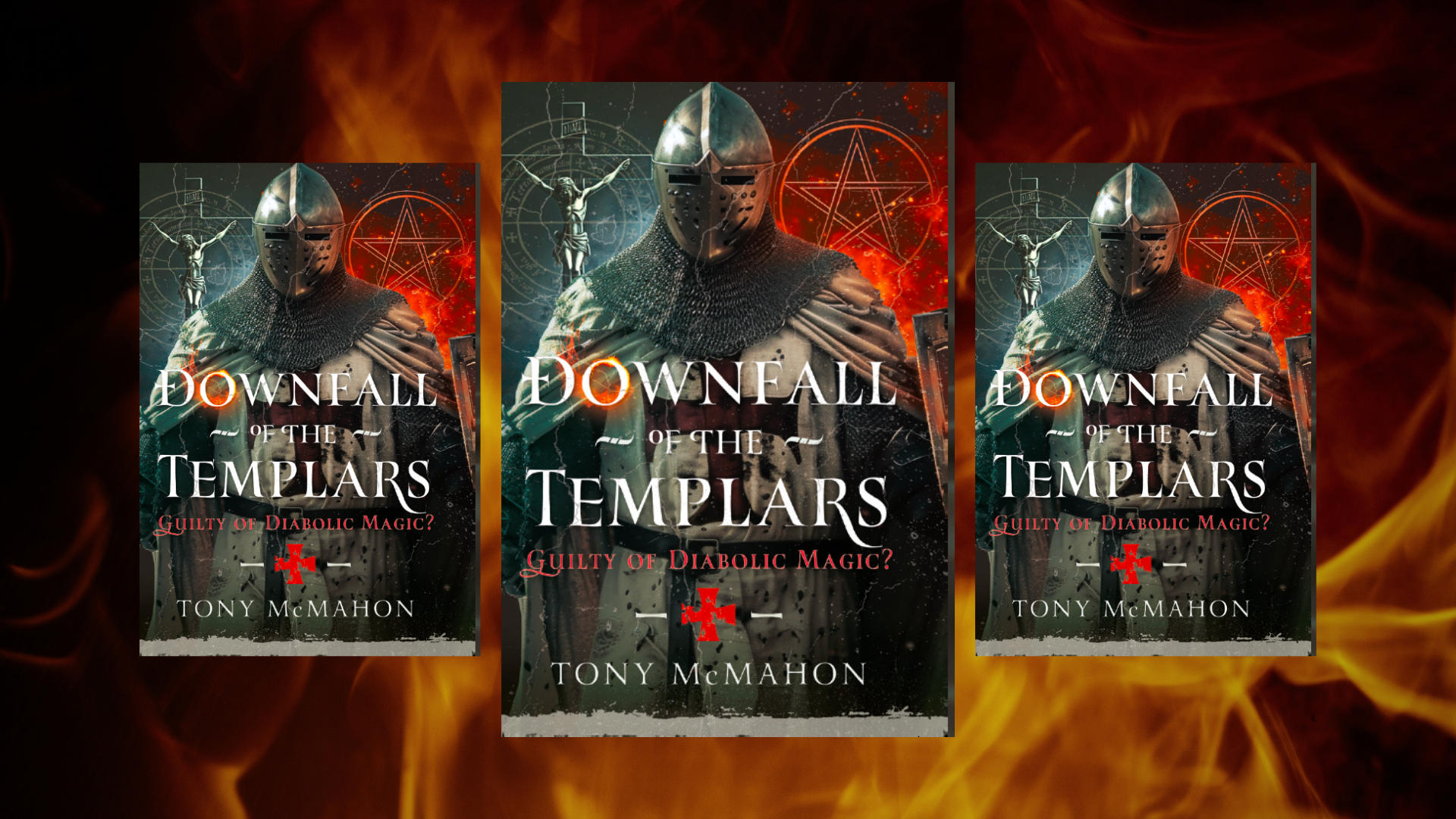
If you would like to know more about the Knights Templar, then get your hands on a copy of my book: The Knights Templar – History & Mystery. Published by Pen & Sword and available on Amazon, Waterstones, Barnes & Noble, and WHSmith. Don’t miss out on your copy!



Reblogged this on economicdeveloper and commented:
Great list for all us castle aficionados’
Carcassone looks beautiful! I love it when ancient structures are preserved like this.
Sooo Beautiful !!! It stirs my heart.., Thank you..!!!
I hope you get to visit these great places!
I went to Carcassonne last year, it is really beautiful, but inside the wall is very touristy and commercialised…I’m so used to Ireland’s ancient places being totally undeveloped, that it came as quite a shock! Well worth a visit, though.
Hi – I agree with what you’re saying. If you want a more authentic experience, I can certainly recommend Obidos in Portugal as well as the nearby Templar ruins at Tomar. You can be based in Lisbon and see both towns. Obidos holds an annual medieval festival where you can rent out medieval costume – very kitsch but a hoot. Tony
Ive never been to Portugal but alwats wanted to. Thanks for your reccommendation!