

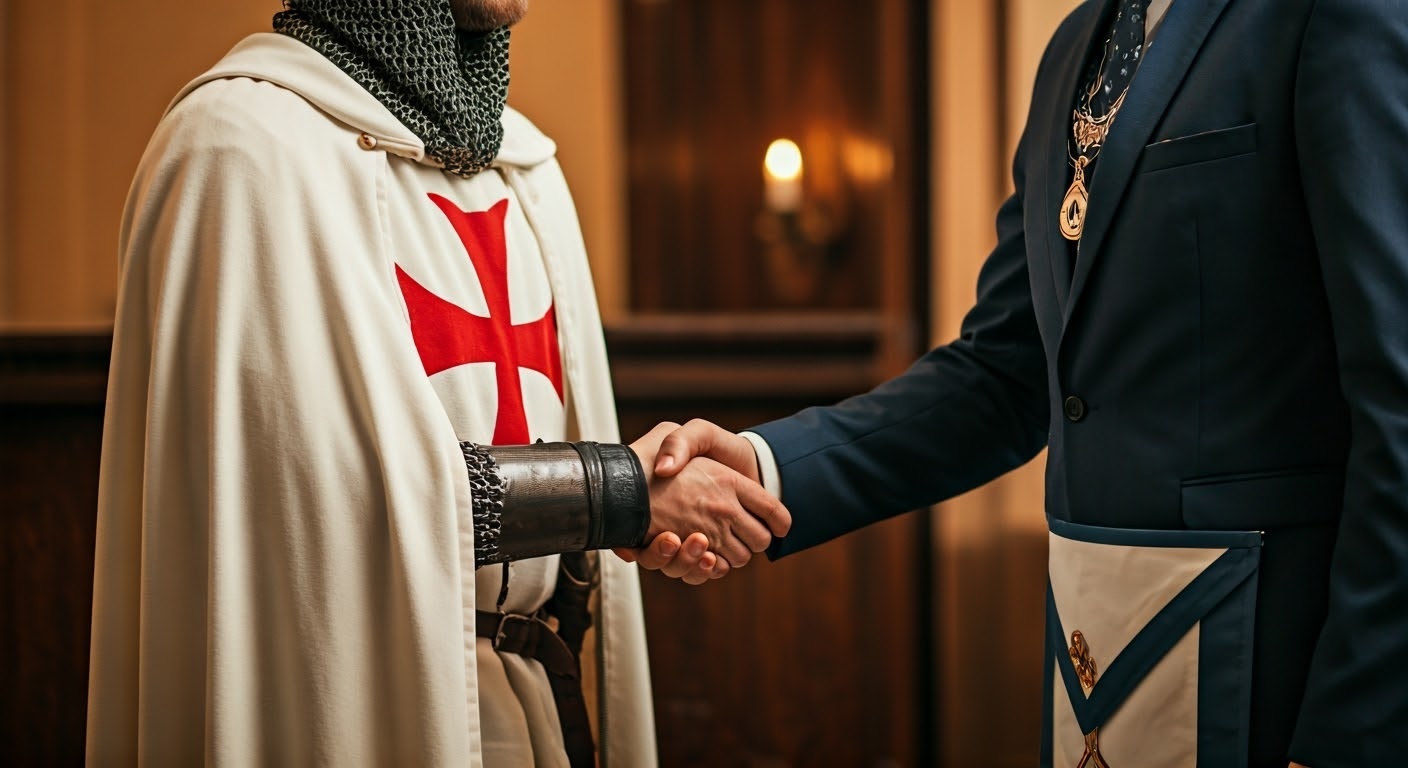
There is a widespread belief that the Knights Templar were not completely destroyed but survived to become Freemasons. Is there any truth to this claim?
One of the main problems with this theory is that many Freemasons claim that their organisation pre-dates the Knights Templar, not just by centuries, but by millennia. They trace the origins of Freemasonry back to Ancient Egypt or later in Saxon England, for example. But then others believe that Freemasonry arose out of a curious synthesis between “operative” stone masons (masons who actually built things) and Templars who were on the run from the Roman Catholic inquisition.
The end of the Knights Templar
The key date on the Templar side of things is 1307 when King Philip IV of France sent out arrest warrants for every member of the order in his kingdom. Supported (even if reluctantly) by Pope Clement V, he began a process of dismantling the Knights Templar, after two centuries of crusading for Christ. In 1312, they were officially banned at the Council of Vienne and in 1314, the last grand master, Jacques de Molay, was burned at the stake. Throughout Europe, Templar assets were disposed off and the members of the order melted into the population.
Mainstream historians argue that was the end of the Knights Templar. Those calling themselves Templars after 1314 were doing so mainly from the 17th century to the present day. The majority of these people are Freemasons with no real historical connection to the Templars. Among Freemasons themselves, there are very different opinions. Most public Masonic voices agree the Templar origin story is a myth – or at least allegorical, not literal. But others are adamant that there is a real link to the medieval knights.
What did the Freemasons say?
When Freemasonry started to emerge in the late 17th century, it claimed ancient roots – going back to the stone masons of the ancient world. The consensus view was that Freemasonry stretched way further back than the Middle Ages. But then Dr James Anderson published The Constitutions of the Free-Masons in 1723 in which he stated that stone masons exercised an influence on “the Warlike Knights”.
Another Mason, Chevalier Ramsay, talked about the Freemasons during the Crusades forming an “intimate union with the Knights of St John of Jerusalem (the Hospitallers)”. Contrary to a widespread erroneous opinion, he never linked the Templars by name to the Masons. Meanwhile, William Hutchinson in 1775 argued that it was Roman Catholic priests in the medieval period who were the proto-Masons initiating crusaders into the secret rites of the Masonic brotherhood.
Anti-Masons forge the link between the Knights Templar and Freemasons
The first writers to assert a strong, cast iron connection between the Knights Templar and Freemasons were anti-Masonic writers in the period after the French Revolution, after 1789. They were often reactionaries blaming the overthrow of the monarchy in France on a clandestine coalition of Freemasons, Knights Templar (who had never gone away), Rosicrucians, and often Jews were thrown into the equation. A classic example of this is the ravings of the Jesuit priest Augustin Barruel in a book published in 1797.
But his views – in one of those strange twists of fate – were taken up in a positive light by Masonic writers in the 19th century. So you have Alfred Creigh, an American Freemason, claiming in the 1860s that the Knights Templar were initiated into the rites of Freemasonry under King Henry II of England – well before they were crushed.
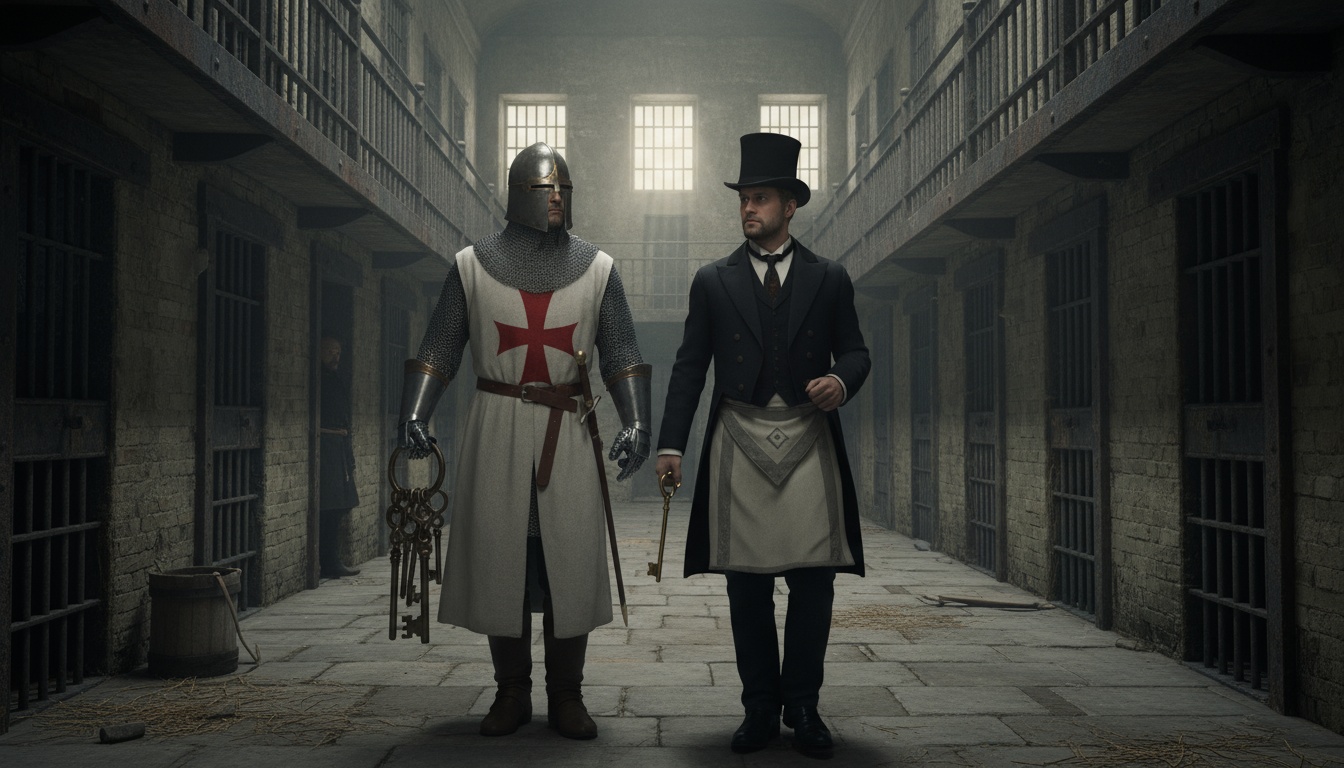
Creigh stated that in the mid-12th century, the Templar grand master, was appointed to “superintend” the Masonic lodges. After they were crushed, Creigh argued, it was only possible to become a Templar – now in hiding of course – if you had gone through the higher degrees of Freemasonry. Templars and Freemasons remained separate organisations for a long while before, essentially, merging.
If you would like to know more about the Knights Templar, then get your hands on a copy of my book: The Knights Templar – History & Mystery. Published by Pen & Sword and available on Amazon, Waterstones, Barnes & Noble, and WHSmith. Don’t miss out on your copy!



One thought on “How the Knights Templar became Freemasons”