


I believe, from my research, that the trial of the Knights Templar, between 1307 and 1312, foreshadowed the witch hunting mania that was about to grip Europe from the 15th to the 17th centuries. Many of the accusations levelled against the Templars were echoed in later witch trials. To prove this, let me introduce you to some top medieval witch hunters. Some names you may know already while others will be new.
In the early Middle Ages, the Roman Catholic church’s attitude to witchcraft was governed by a legal document – the Canon Episcopi. Basically, witchcraft was a superstitious pagan practice and so-called witches had no real powers, because only God directed the universe. Any examples of magic were entirely spurious. However, by the 14th century, that was changing. Witchcraft was becoming conflated with heresy and witches were now cast as accomplices of the devil – and therefore a serious threat.
This was a bizarre development in circumspect. The Roman Catholic church went from pursuing heretics, like the Cathars, without reference to magic to a series of trials where spells and potions were very much part of the prosecution case. Heretics and witches had become two faces of the same demonic evil.
Although it would take until the late 15th century for witchcraft to be fully defined in this way – most famously in the book Malleus Maleficarum (The Hammer of the Witches). Written by the German inquisitor Heinrich Kramer, it differentiated the miracles performed by saints, which manifested God’s power, with the magic of witches, which relied on the intervention of evil spirits to overturn the natural order of things. Below is an image from 1495 of witches using magic to cause a storm.

Already, a century before the Malleus Maleficarum was published, trials of high ranking people for sorcery and dark magic were underway. I believe the trials of the Knights Templar were an early manifestation of this disturbing trend. So, let’s meet some medieval witch hunters who caused so much misery and bloodshed.
FIND OUT MORE: Templar trials sparked the witch hunt craze
The witch trial of Alice Kyteler – inspired by the Templars
The trial of the Knights Templar in France ran parallel with other sorcery trials, also backed by King Philip IV of France, for example against the Beguines and the Bishop of Troyes. But the shockwaves of these trials went beyond France, extending all over Europe. It began to literally stoke the fires of the medieval witch trials. One of the first high profile cases was against a Flemish woman, Alice Kyteler, whose family had settled in Ireland, much of which had come under English rule. This was in the year 1324 – so just a decade after the Templars were crushed.
Alice was married four times and became enormously wealth in her own right. In 1302, she and her second husband were accused of murder by one of her own relatives. She was found innocent on this occasion. Her third husband was a wealthy landowner, Richard de Valle, and after he died in 1316, Alice took legal action against her stepson, also called Richard, to claim the widow’s ‘dower’, or pension, that she was due. This would normally have been resolved as a legal and financial matter. But Alice was a rich woman with enemies – some of whom owed her money.
Her stepson, who clearly coveted his stepmother’s dower, made a beeline for Richard de Ledrede, Bishop of Ossory, who had trained as a church cleric under the sorcery-obsessed pope, John XXII. The bishop concocted a series of charges based on similar alleged crimes brought against the Templars, Beguines, etc in France. These included denying Christ and his church, sacrificing animals to a demon, holding witches covens, and most bizarrely having sex with Robert Artisson who, the bishop claimed, was an incubus. That is a shapeshifting demon. Apparently he could become either an animal or….an Ethiopian!
Alice managed to break free from prison during the trial and escaped – most likely to her native Flanders. An associate, Petronilla de Meath, was not so fortunate and after being found guilty of witchcraft, was burned at the stake on November 3, 1324. In her confessions, extracted under torture, Petronilla claimed to rub ointment on a stick to make it fly.
There were several phallic references in the trials with a strong inference that Alice liked to pleasure herself with a small stick – further evidence of demonic activity!
Post-Templar witch trials in Norway
Among the medieval witch hunters – one bishop turned out to be surprisingly lenient. In the same year as the Irish witch trial, the Norwegian city of Bergen was abuzz with talk of sorcery and diabolism. Bishop Audfinnr was investigating the behaviour of a woman called Ragnhildr Tregagas. Over a period of several weeks, there were reports that she had renounced God and was using magic to pursue an adulterous, and incestuous, relationship with a cousin.
The accused was summoned before Bishop Audfinnr in January 1325. It was alleged that in November 1324, Ragnhildr had used magic to ensure that her male cousin could not consummate his marriage to another woman. Ragnhildr placed five loaves, five peas, and a sword in the wedding bed then hid behind a curtain uttering spells. How all these objects weren’t noticed by the bride and groom is anybody’s guess! But it was enough to keep her male cousin decidedly flaccid.
Initially, Ragnhildr denied the charges but by February 1325, she was admitting everything. One must assume the torturer had been at work. Ragnhildr told the bishop that she had denied God, given herself completely to the devil, and already had sex with her cousin – even when her late husband was alive. In an extraordinary display of leniency, Audfinnr ruled that because Ragnhildr had shown some contrition while being held in chains, she would simply be forced to fast repeatedly every week for the rest of her life and embark on a seven-year pilgrimage to holy sites outside of Norway.
Necromancers in Coventry
And yet another case from 1324 – just ten years after the burning of the last Templar grand master, Jacques de Molay. This was very much an all-male affair. In November of that year, Robert Marshal of Leicester appeared before Simon Croyser, a coroner of the Knights Hospitaller. Robert told Simon that he had lived in Coventry with a man called John of Nottingham. I have to say that what happens next smacks of a close relationship that had gone sour.
Robert said that John was a necromancer who used sorcery to harm others and that the two of them had been using dark magic to make money. So, in essence, Robert was snitching on John to save his own skin. In 1323, they had been visited by a group of 25 people led by a man called Richard Le Latoner (or Lattener), indicating he was a metal worker by trade.
The group had suddenly sunk into debt. What had happened was King Edward II of England and his two hated advisers – Hugh Le Despenser, Earl of Winchester, and Hugh Le Despenser the Younger – had imposed themselves as unwelcome visitors on the Prior of Coventry. Entertaining a visiting medieval monarch was a costly business that could bankrupt a noble or bishop. The Prior was left badly out of pocket and, once the king had left, decided to squeeze his tenants for more rental income, among whom were Richard Le Latoner and this 25-strong group.
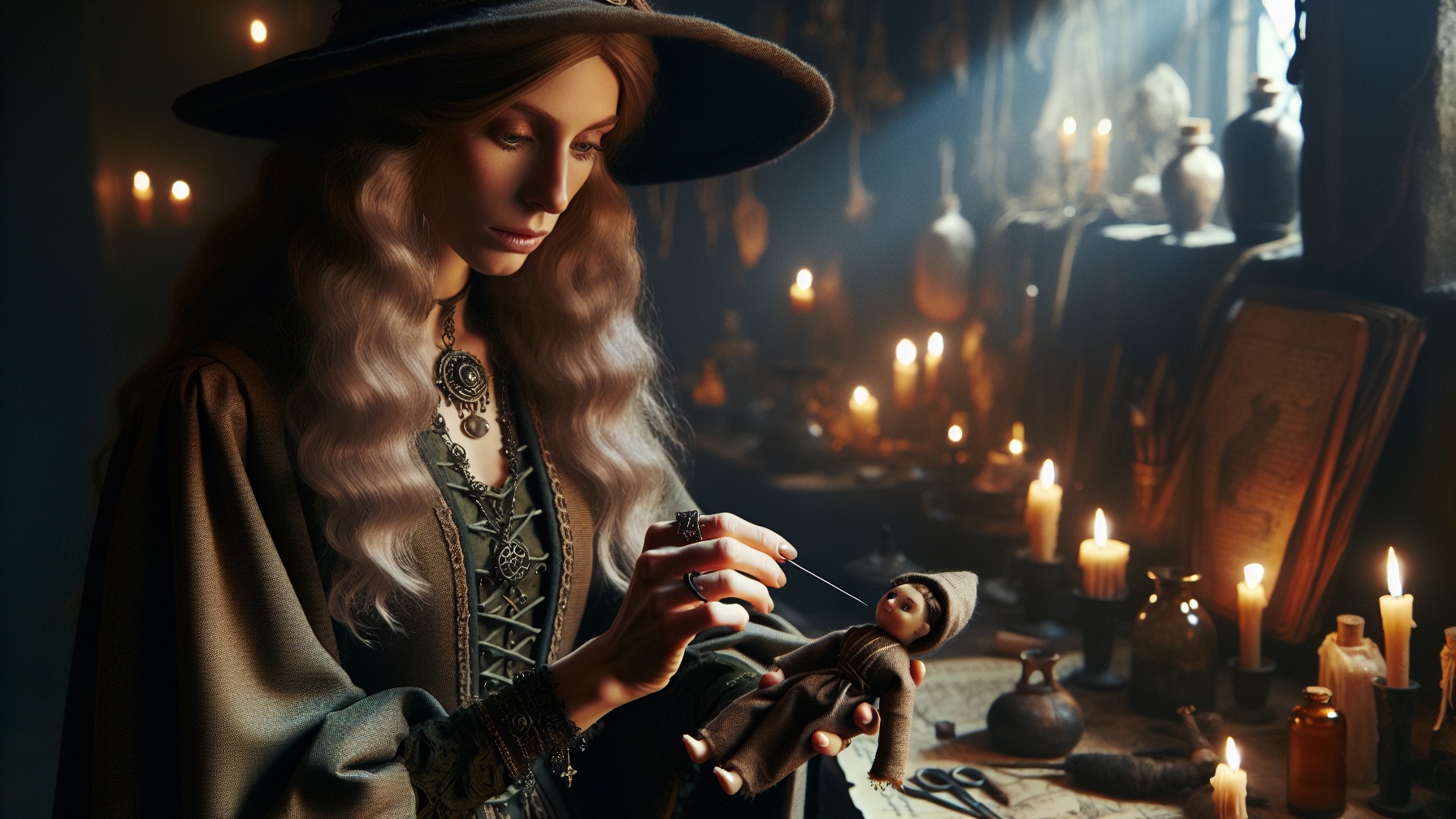
Despite claiming to be hard up, the group handed over £20 to John and £15 to Robert to kill the prior, both Le Despensers, and the king, through magic. Seven pounds of wax was handed over to make dolls representing King Edward II (wearing his crown), the two Despensers, the prior, his cellarer, his seneschal, and a man called Richard of Sowe.
John and Robert decided to test the power of their magic on the doll representing Richard of Sowe. In a house outside Coventry, near Shortley Park, at midnight on the Feast of the Holy Cross, John gave Robert a lead pin and told him to thrust it into the doll’s head at a depth of two inches – so this must have been a fairly large doll. They then spied on Richard the next day and found him howling in agony and having lost his memory. John and Robert then returned to their house, removed the pin from the head, and stuck it into the heart. Going back to Richard, they found him dead. Mission accomplished.
However, the whole plot unravelled and arrest warrants were issued by the Sheriff of Warwickshire. Even though only John of Nottingham was apprehended, the others in the large group began surrendering themselves. They were all tried by a jury and acquitted. Robert’s story was not believed although John had, by that point, died in prison.
If you would like to know more about the Knights Templar, then get your hands on a copy of my book: The Knights Templar – History & Mystery. Published by Pen & Sword and available on Amazon, Waterstones, Barnes & Noble, and WHSmith. Don’t miss out on your copy!




3 thoughts on “Top Medieval Witch Hunters”