


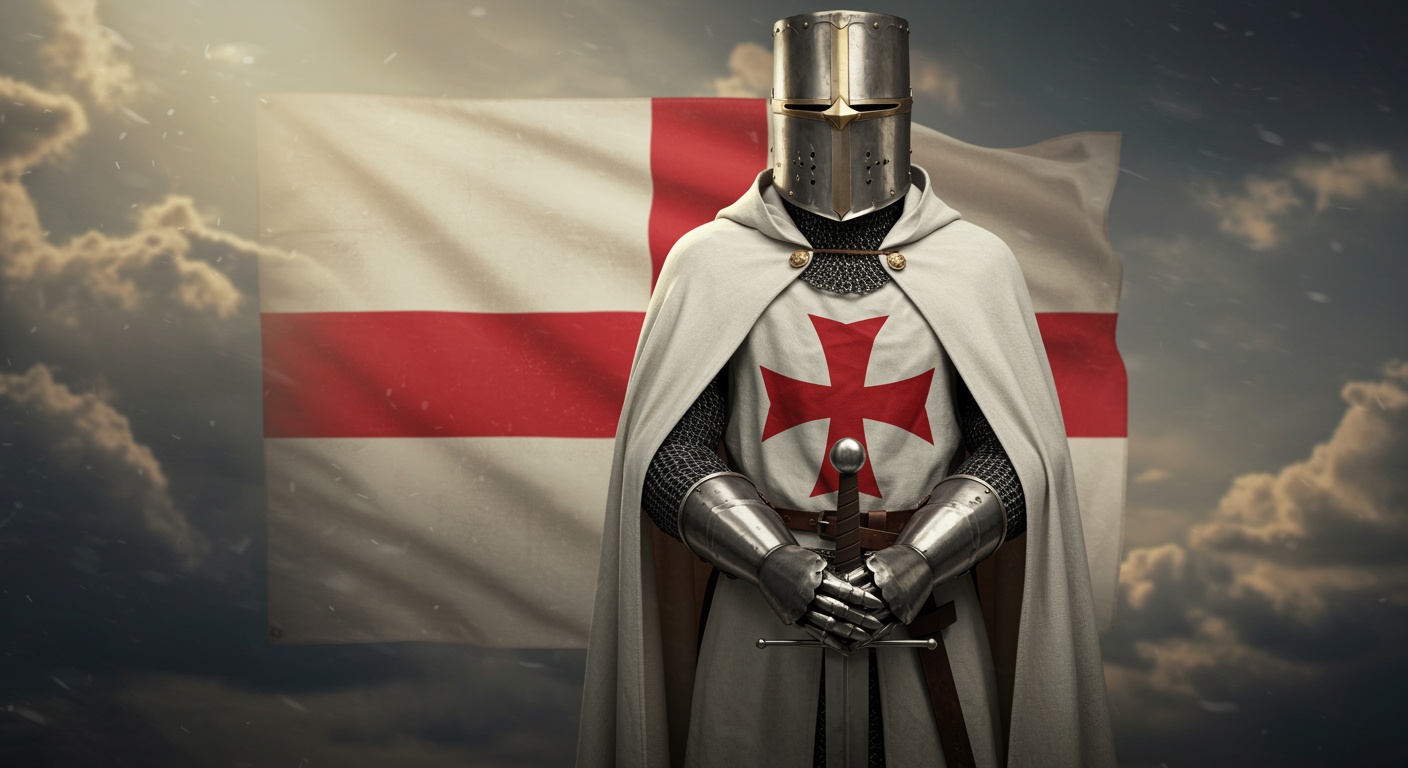
When the Knights Templar in England were crushed in 1312 – what happened to their assets? All their land, goods, and personnel had to be redistributed so where did it go? Two hundred years of crusading history ended in ignominy.
When the knights were arrested after 1308, the kingdom’s sheriffs made a beeline for the English preceptories to draft a detailed inventory of all movable goods and assess the property value. Surprisingly detailed records are still available of the order’s wealth at this time. The richest areas for the Templars were Lincoln and York. Other wealthy locations were Cambridge, Essex, Gloucester, Hereford, Hertford, Leicester, Oxford, and Warwick. Total value of assets in England were £4,720 (a vast sum at the time).
Luxury items were not much in evidence – for example rich armour, trappings, and vestments. There was so little to seize in London that royal officials were convinced the Templars had hidden their assets away. However, no knights were caught red handed making off with costly goods.
King Edward II of England must have been feeling disappointed in the months that followed the arrest of the Templars. Instead of gold and treasure, the monarch had to make do with horses, kitchen utensils, and tools. Having just taken the throne, he relished a windfall that failed to materialise. In one account, the king seized large quantities of Templar wool and also supplies of meat and fish, which were used at his coronation.
When Pope Clement V terminated the Knights Templar at the Council of Vienne in 1312, he ordered Edward to hand over Templar assets in England to the rival Knights Hospitaller. The king ignored this demand until November 1313 when he made a statement of intent to obey the papal demand but in reality, it was very difficult for the Hospitallers to gain title. In reality, the king and his nobles were keen to take back the bequests they had made to the Templars over the years.
Certain nobles seized Templar assets neighbouring their estates. These included Thomas of Lancaster, Robert de Holand, John de Moubray, Guy de Beauchamp, and Aymer de Valence. In response, the Knights Hospitaller resorted to a mix of intense lobbying and bribery to convince Edward to give them what they felt were due. By 1338, they had managed at long last to get their hands on much of the Templar portfolio.
If you would like to know more about the Knights Templar, then get your hands on a copy of my book: The Knights Templar – History & Mystery. Published by Pen & Sword and available on Amazon, Waterstones, Barnes & Noble, and WHSmith. Don’t miss out on your copy!




One thought on “Templar assets in England – what happened?”