


Ridley Scott’s 2005 movie Kingdom of Heaven brought the history of the Crusades to millions of cinema-goers. Five years before, Scott had transported us back to ancient Rome with Gladiator – now we were to be immersed the medieval period. But was Kingdom of Heaven historically accurate – and does it matter if it wasn’t?
I’m very conflicted on this movie. On the plus side, Ridley Scott is a fantastic director who knows how to tell a good story. Many of the visuals in this movie now form our mental picture of key events in the crusades – like the leper king of Jerusalem with his silver mask, key battles, and villainous figures like the violent crusader warrior, Raynald of Châtillon.
On the debit side, I thought Orlando Bloom was miscast as the main protagonist. And there were also glaring factual inaccuracies that have become harder to overlook as the years have gone by. I’m the first to state that historical fiction is fiction first and history second. Yet there is an obligation – especially in our post-truth era – to convey facts. Otherwise, especially with a contentious subject like the crusades, you can end up promoting some very damaging historical narratives.
OK – let’s talk about those inaccuracies first. It’s always more fun to stick the boot in – isn’t it? So, here we go:
- The hero in Kingdom of Heaven is Balian of Ibelin – played by the miscast (in my view) Orlando Bloom. A person by this name did play a major role in the events dramatised in the movie, but there the similarity ends. In Kingdom of Heaven, Balian is an illegitimate French blacksmith who then discovers he is of noble blood. In real life, he never doubted his nobility and was born within wedlock. In the movie, Balian has an affair with Sybilla, Queen of Jerusalem, behind the back of her husband, Guy de Lusignan. In real life, this never happened. Balian was married to the widow of Sybilla’s father: Maria Komnene.
- In the movie, Balian is a valiant defender of Jerusalem – but in reality, he wasn’t there for a greater part of the siege, and when he was, he tried to squirm out of being involved. Or, of course, that might be propaganda against Balian from his enemies. It is true that he took charge of the city’s defences and did eventually surrender it to Saladin.
- Raynald of Châtillon was a vile character but in the movie he encounters the sister of Saladin while raiding a Muslim caravan and kills her. Yet an Arab chronicler on Saladin’s payroll, Ibn al-Athir, confirmed that she had already been intercepted by a military guard sent by Saladin to protect his sister and she was nowhere near the caravan when Raynald showed up. In fact, she outlived her brother, Saladin. By having Raynald kill Saladin’s sister, the movie legitimised Saladin’s war against the crusaders and later execution of Raynald.
- In this movie, Saladin is moderate in temperament, devoid of religious fanaticism, and a calm head when it comes to politics. He is the Saracen counterpart of Baldwin IV, the leper king of Jerusalem. The two rulers are almost secular in outlook, surrounded by theocratic hotheads – especially the crusaders. In England and France, from the Middle Ages onwards, legends developed that even cast Saladin as the illegitimate child of a European noble or that he had even secretly become a Templar. All wishful thinking. Arab chroniclers had no doubt that he was a fierce defender of Islam and viewed his war against the crusaders as a form of jihad.
In the movie, the Knights Templar were depicted as boorish, zealous, bigots with no redeeming features. Some have interpreted this as something that chimed with the “New Atheism” that was in vogue after the 9/11 attacks on the World Trade Center in 2001. Alternatively, it’s very much in line with the negative portrayal of the Templars in 19th century novels like Ivanhoe by Walter Scott.
That said, in Ridley Scott’s favour, two of the leading crusaders in the movie didn’t get a great press from contemporary chroniclers on the Christian side. Gerard de Ridefort, tenth grand master of the Knights Templar, led his knights, against advice, into a disaster at the Battle of Cresson followed by a total calamity at the Battle of Hattin. De Ridefort seemed to be incapable of learning from previous mistakes.
As for Raynald of Châtillon, in a dispute with the patriarch of Antioch, Aimery of Limoges, he had the defenceless cleric beaten, stripped naked, covered in honey, and left out in the sun to be attacked by insects. Here is a depiction of the event, below. So regarding De Ridefort and Raynald, I think we can let Ridley Scott get away with those portrayals.

For me, as a final thought, Kingdom of Heaven was a weaker proposition than Gladiator – which I’ve watched umpteen times. But it did introduce a huge audience to the topic of the crusades and the Knights Templar. For that, we must thank Ridley Scott.
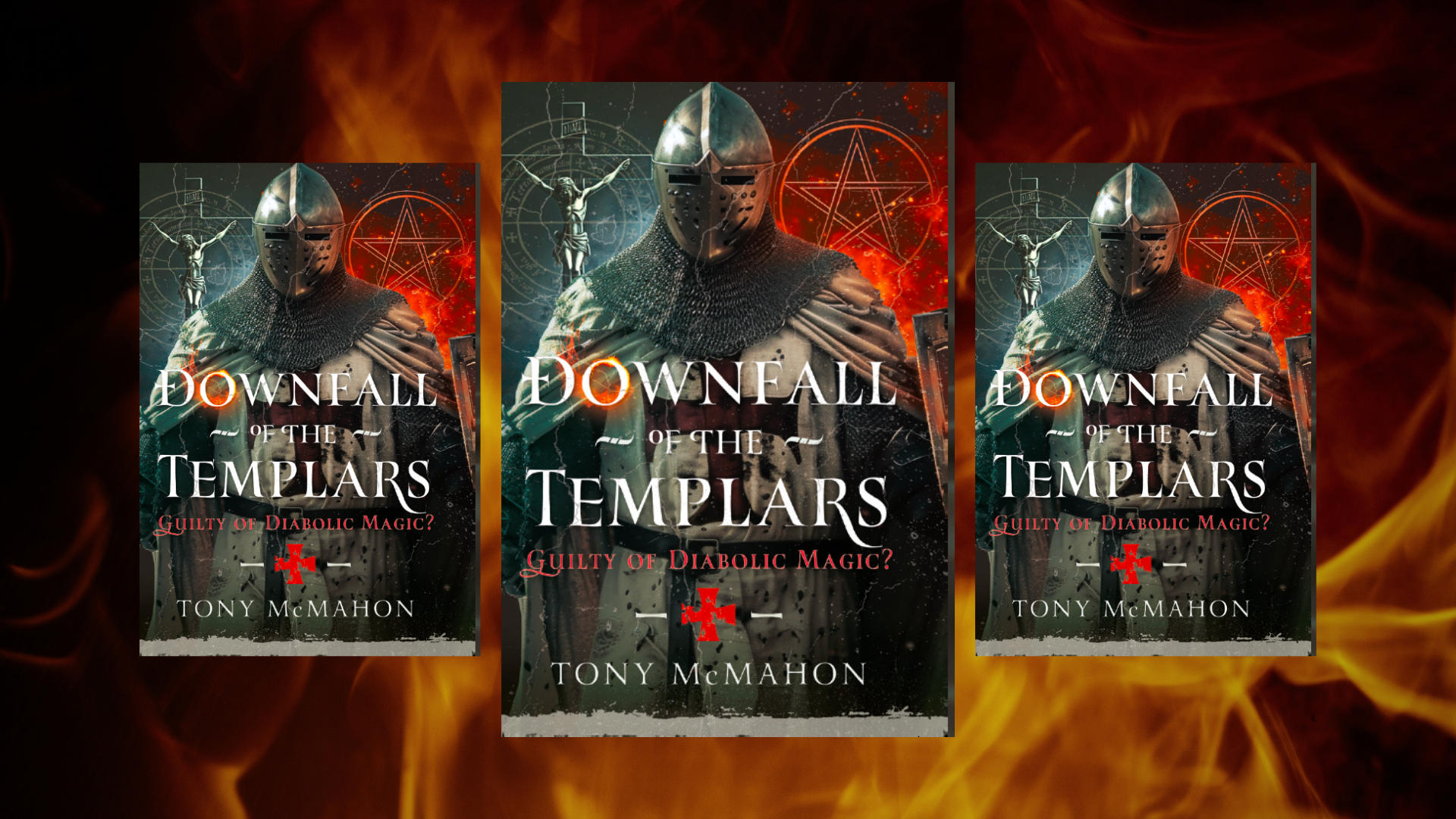
If you would like to know more about the Knights Templar, then get your hands on a copy of my book: The Knights Templar – History & Mystery. Published by Pen & Sword and available on Amazon, Waterstones, Barnes & Noble, and WHSmith. Don’t miss out on your copy!