

An ex-Satanist has just been canonised as a saint by Pope Leo XIV in a ceremony at the Vatican. Bartolo Longo devoted himself to the worship of Satan in the 1860s but later claimed his body was ravaged as a result of his sinful ways. He then became a devoted Roman Catholic and a knight in the Equestrian Order of the Holy Sepulchre of Jerusalem (or, if your prefer in Latin, Ordo Equestris Sancti Sepulcri Hierosolymitani). His body is preserved in a glass casket with his remains dressed as a holy warrior.
But why has the Vatican taken such an interest in this former Satanist – now declaring Bartolo Longo a saint? Let’s investigate but first, an image of the new saint in his resting place. Then continue reading below.

DISCOVER: Holy Sepulchre – sacred to the Knights Templar
Italian nationalists hated the Pope
Bartolo Longo (1841-1926) was born into a bourgeois Italian family and trained to be a lawyer. This was at a time when Italy was struggling to become a unified country. Since the fall of the Roman Empire, the peninsula had been a patchwork of kingdoms, duchies, and the Pope ruled a central band of territory known as the Papal States. Bartolo supported unification and like many Italian nationalists viewed the pope and his realm as a barrier to that achievement. They yearned to create the new country: Italy.
It must be understood that there was a high degree of hatred of the papacy among Italian nationalists with the great nationalist Giuseppe Garibaldi accusing the church of all manner of crimes including sexual abuse. Also, the notorious inquisition was still a powerful force in early 19th century Italy with the power to imprison and execute anti-Catholic dissenters. For example, it took a very hostile stance towards Freemasonry, throwing one leading Mason – the so-called Count Cagliostro (a fake count, but that’s another story) – into a windowless cell where he died.
Satanism doesn’t agree with Bartolo Longo
Bartolo decided to become a Satanist at the height of his nationalist fervour but apparently realised he’d made a terrible mistake. He staggered around with “a body reduced to skin and bones, two possessed eyes, frazzled nerves, a devilish beard, and a stomach ailment doomed to accompany him for the rest of his life”. Selling his soul to Satan was taking its toll on his health.
This was a time when there was a massive interest in spiritualism and other alternative beliefs. We think of the Victorians as terribly buttoned-up and pious but actually, they loved a good cult. Belief in the supernatural, devil worship, and non-Christian religions from the east boomed in the 19th century. It was all terribly exotic and could be mashed up with political views like nationalism, anti-clericalism, and even socialism.
But, as Catholic sources delighted in pointing out, Bartolo returned to the church eager to be forgiven. He became especially devoted to the promotion of the Rosary. And in the 1870s, he built a hulking great church in the town of Pompeii (also spelt Pompei) – famous for its nearby Roman ruins. The Pontifical Shrine of the Blessed Virgin of the Rosary of Pompei became a major pilgrimage site and in just a few years after his death, Catholics were calling for the canonisation of Bartolo in the 1930s.
It’s taken a while to give this ex-Satanist his halo but Pope Leo has now obliged. Bartolo’s body has been on display for a century and you can see it today in the robes of the Order of the Holy Sepulchre. So, what exactly is that order?
Order of the Holy Sepulchre – what is it?
As we know, being keen Templar historians, the Knights Templar were linked very much to the Holy Sepulchre as the church that covers the ground where Jesus Christ was both crucified and buried then resurrected. This was the most important church in Christendom during the medieval period.
When Jerusalem was taken by the crusaders in the year 1099, a group of canons (priests) called the Milites Sancti Sepulcri were put in charge of its security and defence. There was a constant threat of the Saracen enemy returning to place the city back under Muslim rule. The Order of the Holy Sepulchre traces its origins back to that organisation set up during the First Crusade.
The first Templar grand master, Hugh de Payens, may very well have been a member of this order of knights before striking out in 1118 to found the Knights Templar, who were then based in what is now the Al Aqsa Mosque, but was then renamed the Temple of Solomon. The Templars went on to have a far more glorious, though also controversial history over the next two centuries.
Jerusalem fell to Saladin in 1187 and reverted to Islamic rule until the end of the First World War. In the late Middle Ages, Jerusalem was assigned to the Franciscan order who effectively took over the knighthood of the Holy Sepulchre. There were attempts in the 15th century to merge the order with the Knights Hospitaller but this plan was shelved. Instead, the papacy took direct control, dubbing new knights and appointing the grand master.
The Order of the Holy Sepulchre became an honorary title that the popes could confer on Roman Catholics. Recent popes, Paul VI and John Paul II particularly, have given the order a higher status within the Vatican and it’s believed to have about 30,000 members today.
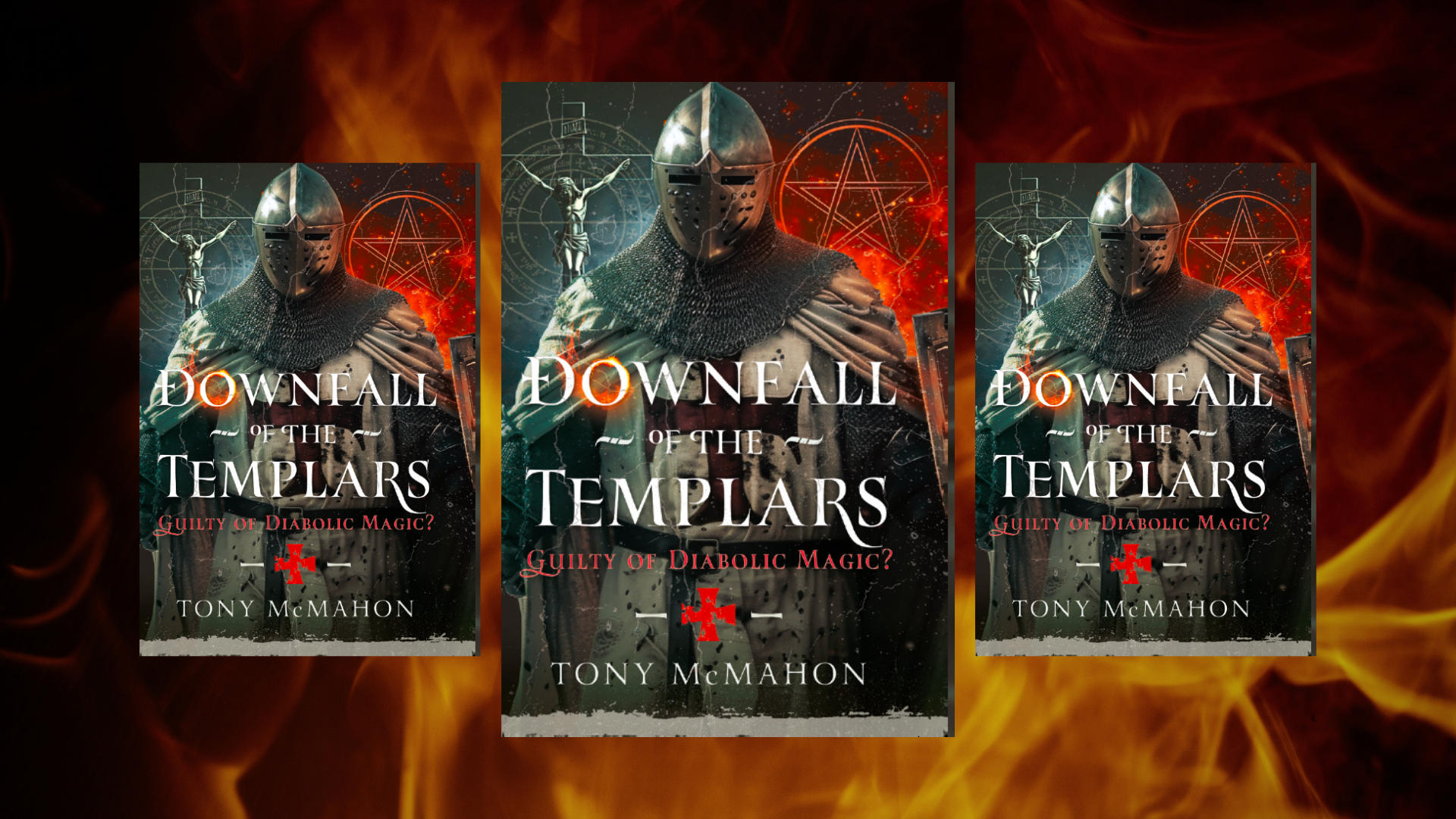
If you would like to know more about the history of the Knights Templar – then get my new book: Downfall of the Templars – Guilty of Diabolic Magic? Now available on Amazon and other online stores.