


I’ve spent years obsessing over the Knights Templar. Running the Templar Knight blog, appearing on TV documentaries with the likes of William Shatner and Laurence Fishburne, and spending countless hours in archives and libraries chasing down every lead I could find on these extraordinary medieval warrior monks. So when Pen & Sword approached me about writing a trilogy of books on the Templars, I jumped at the chance. Two of those books are now published, and I want to tell you exactly what’s inside them and why I think you should read both.
Book One: The Knights Templar: History & Mystery

The first book — The Knights Templar: History & Mystery — came out in hardback on November 30, 2024, and it does exactly what the title promises. This is the complete story, told in full, from the very beginning to the very end.
I wanted to write a book that answered every question a curious reader might have about the Templars. Not just a dry academic text, but something genuinely gripping — because the story of the Templars is genuinely gripping. It’s a tale of faith, greed, courage, betrayal, and ultimately, catastrophic destruction.
I start the book well before the Templars even existed, going back to the events that provoked the Crusades in the first place. There’s a mysterious letter from the east that played a crucial role in triggering the whole crusading movement, and I explore that episode in depth. From there, I take the reader through the founding of the Knights Templar — their original mission statement, if you like — and look at how this small band of warrior monks protecting pilgrims in Jerusalem grew into one of the most powerful and wealthy organisations in the medieval world.
And it grew fast. One of the questions I’m most often asked is: how did the Knights Templar get so rich, so quickly? The medieval world had what I’d call a bout of Templar fever in the 12th century, with kings, nobles, and ordinary Christians across Europe donating land, money, and castles to the order. The reasons for this are fascinating, and I go into them in detail.
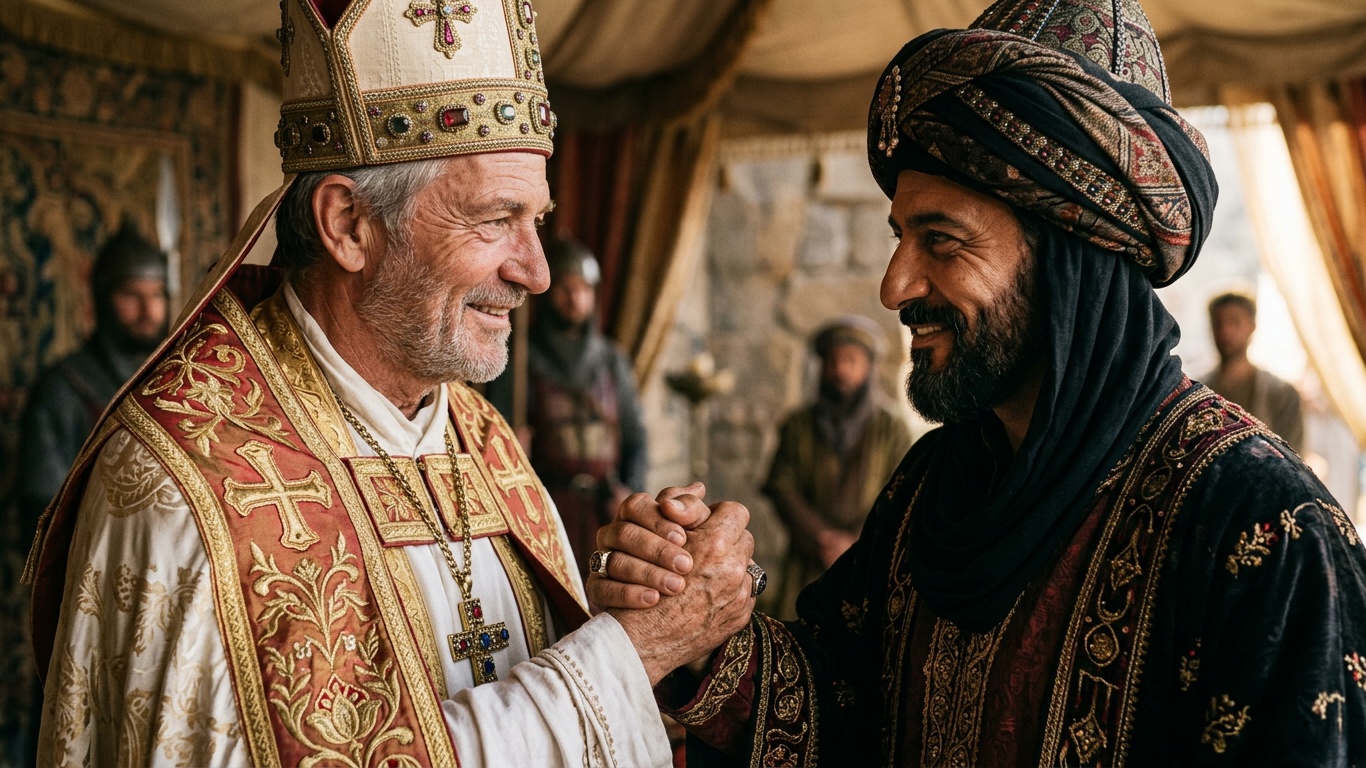
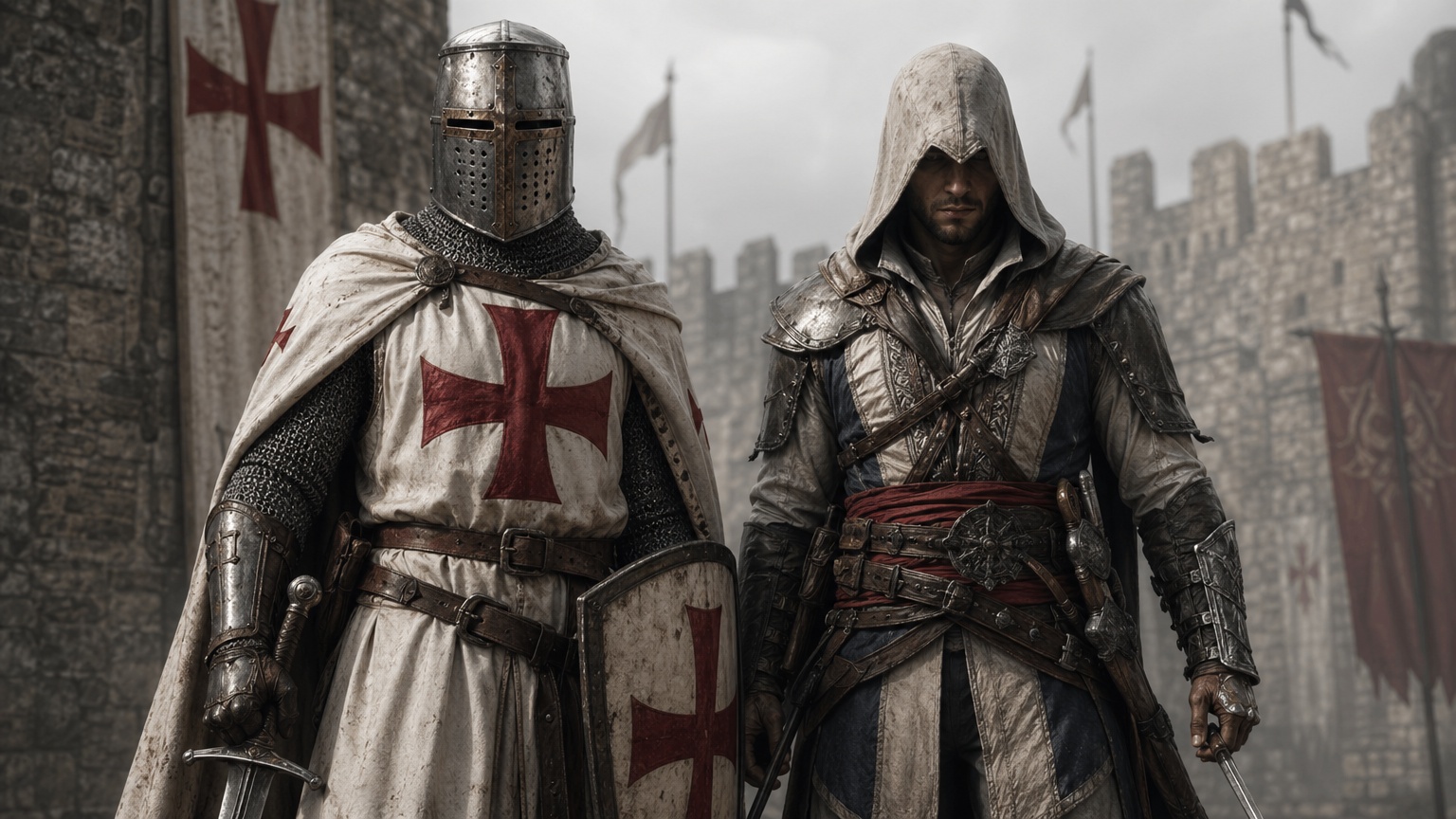
The book also covers some of the more surprising aspects of Templar history that even dedicated enthusiasts sometimes don’t know. Did you know, for instance, that Gaza was a Templar stronghold? Or the complex and sometimes counterintuitive relationship between the Templars and their supposed enemies, the Assassins? What connects the Templars to the legends of King Arthur? I address all of this.
Of course, no book on the Templars can avoid the dramatic endgame — the mass arrests in France on Friday 13th October 1307, the torture, the trials, and the eventual execution by burning of the last Grand Master, Jacques de Molay, in 1314. I cover all of that, and I also look at how the Templars have been interpreted through the centuries since their destruction — why they’ve captured the imagination of conspiracy theorists, novelists, and filmmakers, and whether any version of the order survives today.
This first book is intended as the foundation. Get this one, and you’ll be fully equipped with everything you need to understand the more specialised argument I make in the second book.
Book Two: Downfall of the Templars: Guilty of Diabolic Magic?

The second book — Downfall of the Templars: Guilty of Diabolic Magic? — was published in November 2025, and it’s where I really get to advance a thesis I find genuinely exciting and, I think, historically important.
Everyone has heard the standard explanation for the Templars’ downfall: King Philip IV of France was broke. He had wars against England and Flanders to fund. He’d already squeezed the Jews, the Lombard merchants, and the monasteries. The Templars were rich. So he fabricated charges against them, destroyed them, and grabbed their assets. Case closed.
I don’t think it’s that simple. And in this book I make the argument that the trial of the Templars was not simply a cynical land grab. It was something far more disturbing — and far more significant for the history of Europe.
Here’s what struck me in my research. At exactly the same time that the Templars were being accused of heresy, sodomy, demon worship, and desecrating holy objects, Philip IV had also initiated legal proceedings against a group of women called the Beguines, against the Bishop of Troyes, and — in one of the most extraordinary episodes I’ve ever come across — against a dead pope. Boniface VIII was posthumously put on trial for diabolism after he had already been in his grave. All of these cases, running in parallel, accused the defendants of essentially the same thing: satanic conduct.
What I conclude from this is that we are witnessing the very beginning of the witch trial phenomenon that would explode across Europe in the following centuries. The machinery being constructed to destroy the Templars — the inquisitors, the torture, the lurid charges, the confessions extracted under duress — is the same machinery that would later be turned on hundreds of thousands of accused witches.
The Beguines are particularly telling. These were women preachers who had previously been tolerated by the church. Now they found themselves being interrogated by the same inquisitors who were torturing Templar knights. In 1310, 54 Templar knights were burned to death at one of the city gates of Paris. About three weeks later, in the very same spot, the leading Beguine, Marguerite Porete, was burned to death too. I argue in the book that we must understand both of these prosecutions as de facto witch trials.
Now, was Philip purely cynical? I don’t think so, and this is the part of my argument that I find most unsettling. I believe Philip sincerely bought into the accusations against the Templars. His dynasty, the Capetians, saw themselves as enjoying a uniquely close relationship with God. His own grandfather, Louis IX, had been declared a saint by the church during Philip’s lifetime. Philip believed he was the special protector of Christendom. He saw witches and sorcerers everywhere, and he genuinely imagined that in destroying the Templars he was defending the faith against the forces of Satan.
There’s a great deal of evidence from the period that supports this reading, and I go through it carefully in the book. I also look at the mounting tension between Philip and the papacy — he wanted to exercise the powers of a pope within his own realm, frequently overruling the actual pope — which adds another dimension to the whole story.
The charges levelled at the Templars — indecent kisses at initiation rituals, pornographic ceremonies, sodomy, demon worship, spitting on the cross — are precisely the charges that would be levelled against accused witches for the next four hundred years. This is not a coincidence. In the 13th and 14th centuries, the Roman Catholic church began weaponising the concept of witchcraft, using it to beef up charges of heresy against anyone who challenged ecclesiastical power or wealth. The Templars were among the first major victims of this process.
This book will, I hope, make you rethink everything you thought you knew about why the Templars were annihilated — and whether any of the charges against them contained a grain of truth.
Where to Get the Books
Both The Knights Templar: History & Mystery and Downfall of the Templars: Guilty of Diabolic Magic? are published by Pen & Sword and available now on Amazon, Waterstones, Barnes & Noble, and directly from Pen & Sword’s website. A third book in the trilogy is in the works, so watch this space.
If you’ve ever been curious about the Knights Templar — and I suspect, if you’ve read this far, you are — these are the books I’ve written for you. Start with the first for the full history, then come to the second for the argument that I think changes how we understand one of the most dramatic episodes in medieval history.
I’d love to hear what you think once you’ve read them.