


Hardly any of us use cheques anymore. Throughout my youth, this was a way of transferring money that was convenient and simple – but very analog! Some have argued that the origin of the cheque goes back to the Knights Templar – those intrepid early bankers. But is this really true?
The Knights Templar developed the letter of credit, which is considered a precursor to modern cheques and bank drafts. The Templars issued coded paper bills that could be exchanged for money at their preceptories. This was great news for pilgrims and crusaders heading for the frontline in the Holy Land. Now their wealth was easily portable with the risk of being robbed on the road minimised.
All you had to do was make a deposit at a Templar preceptory in your home country and receive the letter of credit. Then that letter could be presented at another Templar preceptory hundreds of miles away. So a noble might leave London for the crusades and once he got to Jerusalem or Acre, simply draw down some of his money.
Maybe Templars didn’t invent the bank cheque after all
But did the Templars really invent the first bank cheques? India has a Museum of Accountancy where it’s claimed that the Mauryan Empire, which ruled their country well over two thousand years ago, originated the first bank cheques: the ‘adesha’.
An adesha was an instrument used by the Mauryans to order a banker to pay a third party the amount on a note. It was similar to a modern bill of exchange. This was then copied by the Romans with something called a ‘praescriptione’. Both these predate the Templar bank cheques by over a thousand years.
DISCOVER MORE: Did the Templars really get to Oak Island?
The beauty of the Templar bank cheque
As we know, the Templars issued paper bills that could be exchanged for money at preceptories from England to the Holy Land. This prevented having to carry your wealth around with you in boxes and caskets – making you a very attractive target to robbers. For crusaders and pilgrims, this was a welcome development.
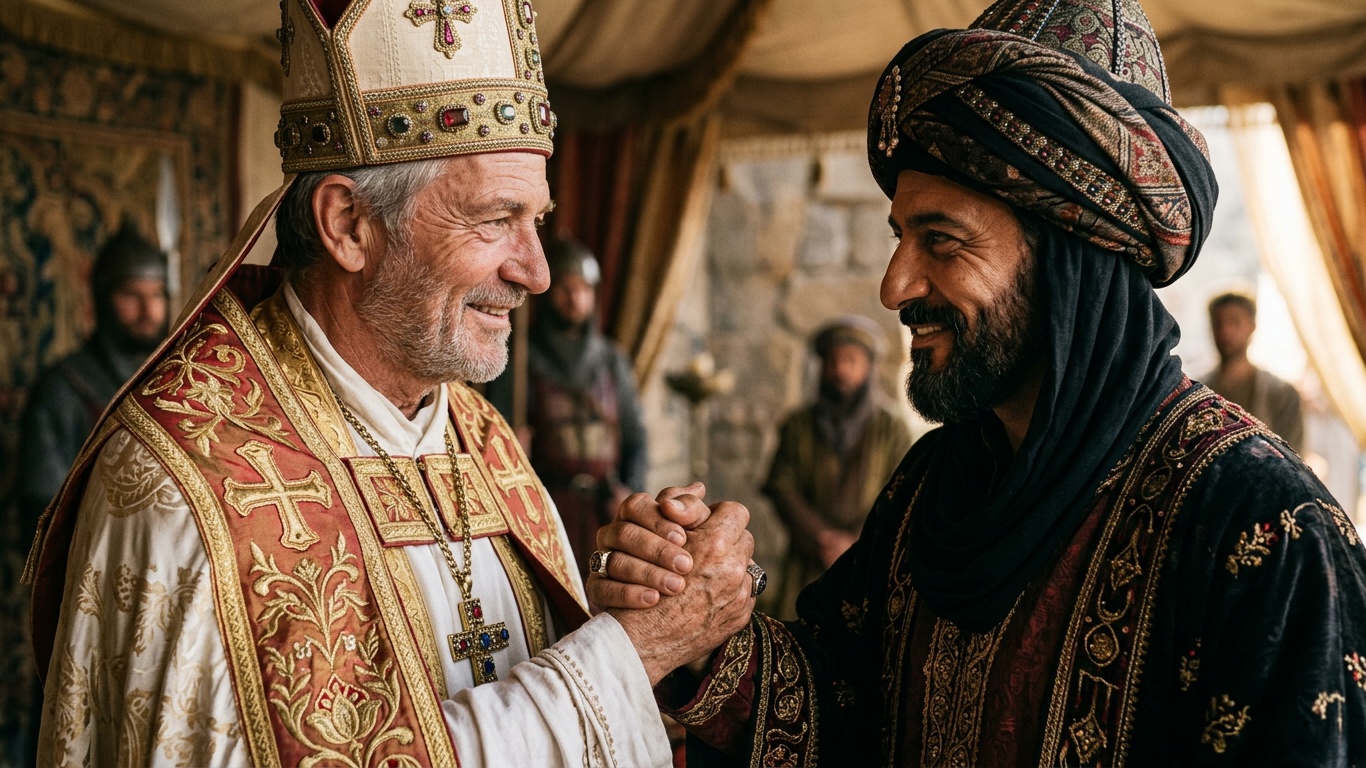
It seems entirely plausible to me that the Templars picked up the idea of cheques from the Muslim caliphate. They had been in use from the time of Harun al-Rashid, the fifth of the Abbasid caliphs, and issued in Baghdad, they could be used all over the Islamic world and beyond.
The Templars seem to have had the attitude that in order to defeat the enemy, there was nothing in wrong in stealing their best ideas. They were Islam’s hardiest foe and most ardent imitator – something misinterpreted as fraternising with the enemy by the Templar Order’s enemies.
The bank cheque originating in Troyes merchant fairs and not with the Knights Templar
Another possibility is that the Templars got the idea from the huge fairs held at Troyes in Champagne – where many of the original Templar knights came from. Merchants moved money from fair to fair using forms of cheques. Possibly this is where the knights got the idea and developed it.
Cheques are one of those ideas that are instantly attractive and simple leaving you wondering why nobody thought of it before. I’m sure once the Templars observed muslim merchants exchanging these bills, they adopted the practice themselves.
If you want to know more about the Knights Templar then buy my new book: The Knights Templar – History & Mystery – by Tony McMahon – published by Pen & Sword – available on Amazon, Waterstones, WHSmith, and Barnes & Noble.