


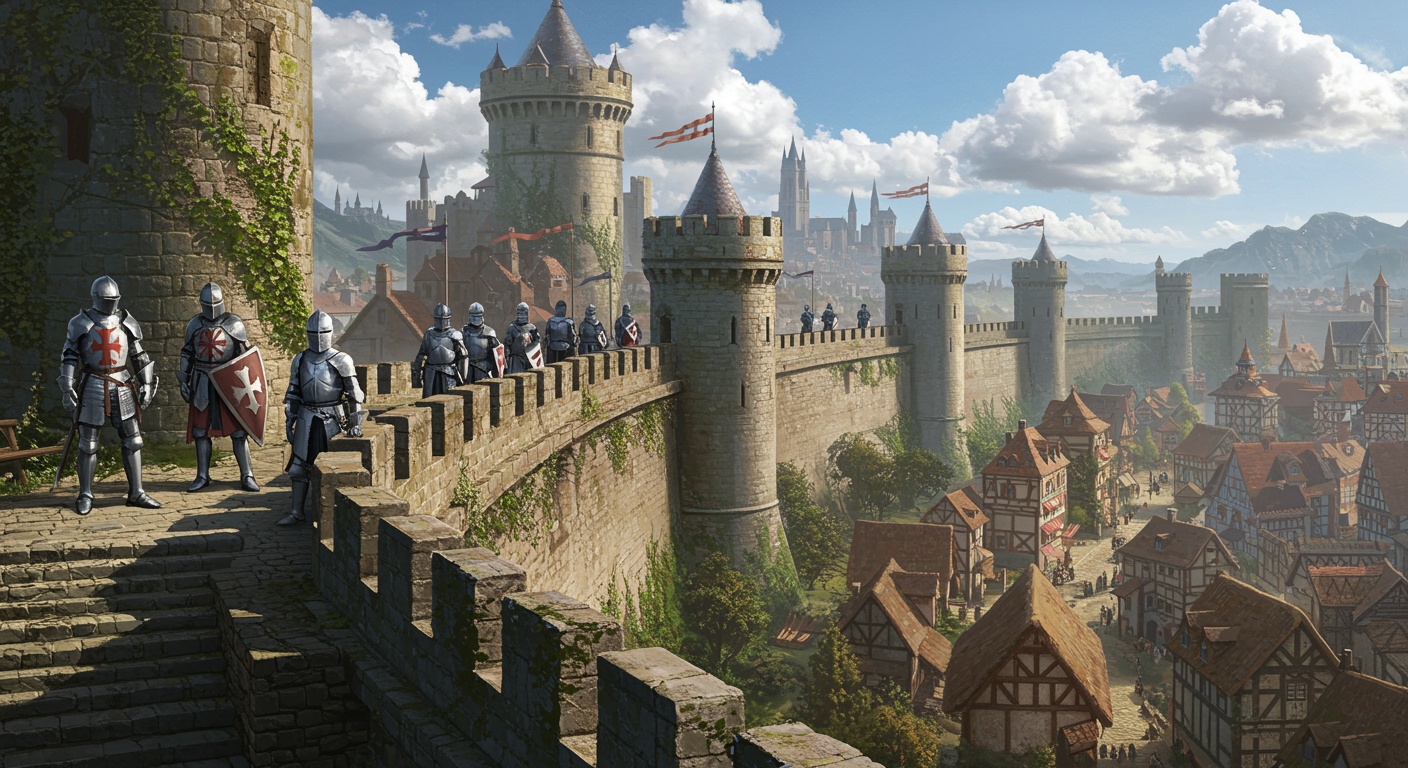
London once had a wall that surrounded the entire city – what’s now called the City of London (or the ‘Square Mile’). Built by the Romans to defend against attacks by Saxon raiders and mutinous forces within the province of Britannia, it stood for over a thousand years. Today, however, only a few traces can be found.
The London Wall was built by the Romans as a defensive structure around the landward side of Londinium – as they called the city. The wall was constructed using ragstone, a type of stone that was brought by barge from Kent. The wall was renewed and extended during the medieval period. As London expanded, the wall was no longer necessary for defense, and much of it was demolished.
In the Middle Ages, it was repaired and towers and crenelations added. But by the eighteenth century, the city was bursting out of the walls. One by one the great gates were demolished and only place names like Aldgate, Cripplegate, Bishopsgate and Newgate offer clues that there were several entrances in to the city.
Bit by bit the rest of the wall was demolished. However, here and there – some small bits have survived dwarfed by today’s skyscrapers. Here’s a small section I snapped last week.


If you would like to know more about the Knights Templar, then get your hands on a copy of my book: The Knights Templar – History & Mystery. Published by Pen & Sword and available on Amazon, Waterstones, Barnes & Noble, and WHSmith. Don’t miss out on your copy!