


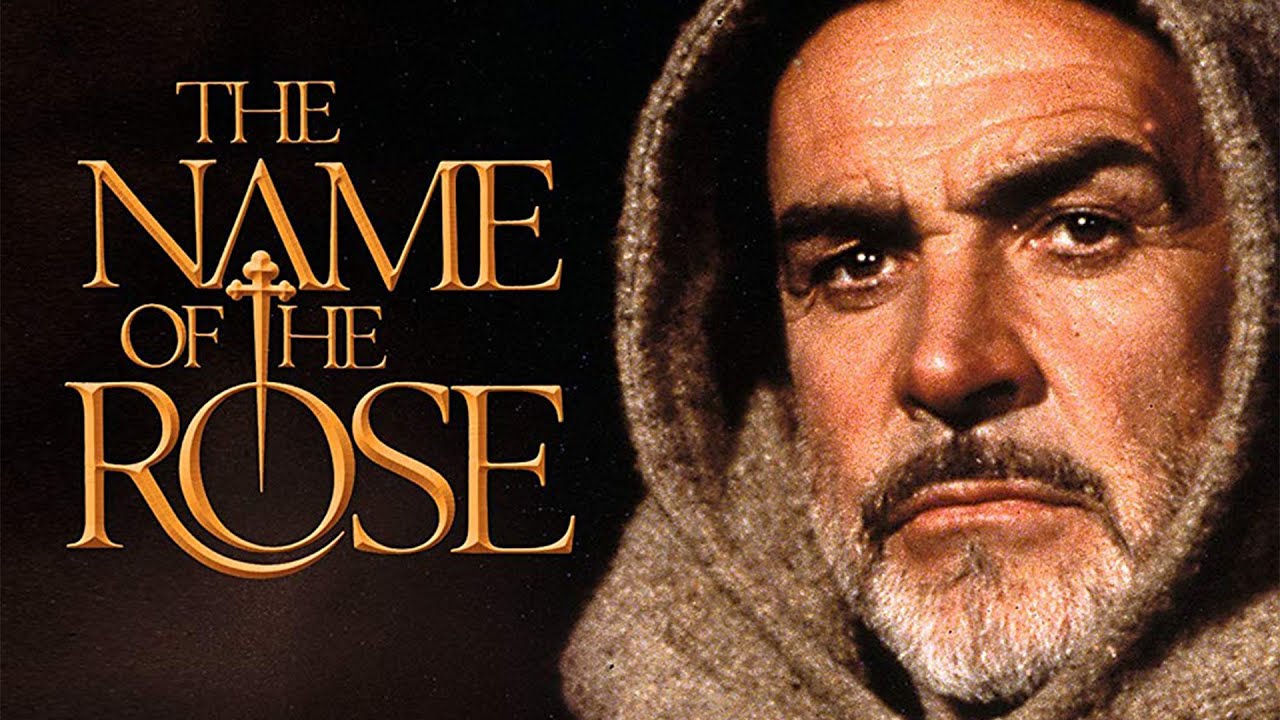
A series of murders hits a Benedictine monastery in medieval Europe. The race is on to find the killer. This is the basis for the Italian author Umberto Eco’s medieval thriller – The Name of the Rose. This gripping novel was adapted for the cinema screen with Sean Connery in the lead role as a monastic sleuth. It was remade in 2019 for Netflix with John Turturro as the main protagonist.
The story unfolds in a grand, fortified abbey in northern Italy at a time when some Franciscan friars are demanding the church emulate the true poverty of Christ while the pope, dripping in jewels and gold, is condemning this as heresy. William of Baskerville, the hero, arrives to hear a debate between the Franciscans and papal representatives.
This is not a polite debate but a discussion that could lead to people being burned at the stake as heretics. And William should know. He was once an interrogator in the papal inquisition but displayed too much leniency, which resulted in him being tortured and thrown out of the inquisition. His nemesis is the grand inquisitor, former colleague and now sworn enemy Bernard Gui, who also turns up at the abbey for the debate. William is accompanied throughout the story by his young and very wet-behind-the-ears assistant, a young monk called Adso.
While Franciscans die all around them, William delves into the abbey’s secret library, a forbidden space containing ancient texts and potentially dangerous knowledge. He uncovers a hidden conspiracy linked to the abbey’s library and the history of the Catholic Church. Through his investigation, William identifies the murderer and reveals the truth behind the murders, which are linked to a struggle for power and control over knowledge.
Literary and Historical references
Umberto Eco loved to litter his works with all kinds of references – he enjoyed playing with ideas. Eco was also hugely interested in the Knights Templar and spent a good deal of time in the Portuguese town of Tomar – overlooked by a massive Templar fortress. He would sip a coffee at the Café Paraíso in the middle of town and muse about the theological influences on the knights. It’s a cafe I know well and I only wish I could write as well as Eco!
The novel is infused with the ideas of Aristotle, William of Occam, and Roger Bacon but also references Sherlock Holmes by calling the protagonist, William of Baskerville (a nod to the Sherlock Holmes story, The Hound of the Baskervilles, in case you’re not a fan). This character is a detective seeking to uncover the truth behind a murder – a medieval Sherlock Holmes. The novel also includes an allusion to Edgar Allen Poe’s The Cask of Amontillado, particularly in the scene of a man trapped in a secret passage.
Bernard Gui is a member of the Dominican order and works for the Inquisition, the Church’s court for prosecuting heresy. The Dominican order – the black friars – played a leading role in the inquisition as the church’s legally trained intellectuals. Gui was a real-life inquisitor involved in the prosecution of the Knights Templar and other heresies in the late 13th and early 14th centuries. He wrote a still-existing manual for inquisitors on how to best interrogate a suspected heretic. It makes for uncomfortable reading.
In the 1987 movie version of The Name of the Rose, Gui is impaled to death while fleeing the burning abbey. This didn’t happen in reality. Some historians have taken issue with Eco’s depiction of Gui as a sadistic, cold, and ruthless operator. They have criticised Eco, claiming that his characterisation is more a product of 18th and 19th century anti-Catholic tracts than the reality of the Middle Ages.
However, academic revisionism can go too far. There are plenty of contemporary chronicles of heresies being suppressed where the authors could barely contain their glee at the horrific fate met by heretics. And there are records of “debates” between Dominican inquisitors and alleged heretics where it’s very clear that the losing side will not simply be allowed to leave the room unharmed.
For example, the Dominicans debated leading members of the Cathar heresy at Verfeil, Servian, and Pamiers. When talk failed to make them yield, the pope launched an armed crusade followed by a series of public burnings of Cathars. Bernard Gui was involved in the mopping up operations.
I thoroughly recommend you watch The Name of the Rose and read the novel. It’s a must for Templar fans!
If you would like to know more about the Knights Templar, then get your hands on a copy of my book: The Knights Templar – History & Mystery. Published by Pen & Sword and available on Amazon, Waterstones, Barnes & Noble, and WHSmith. Don’t miss out on your copy!