

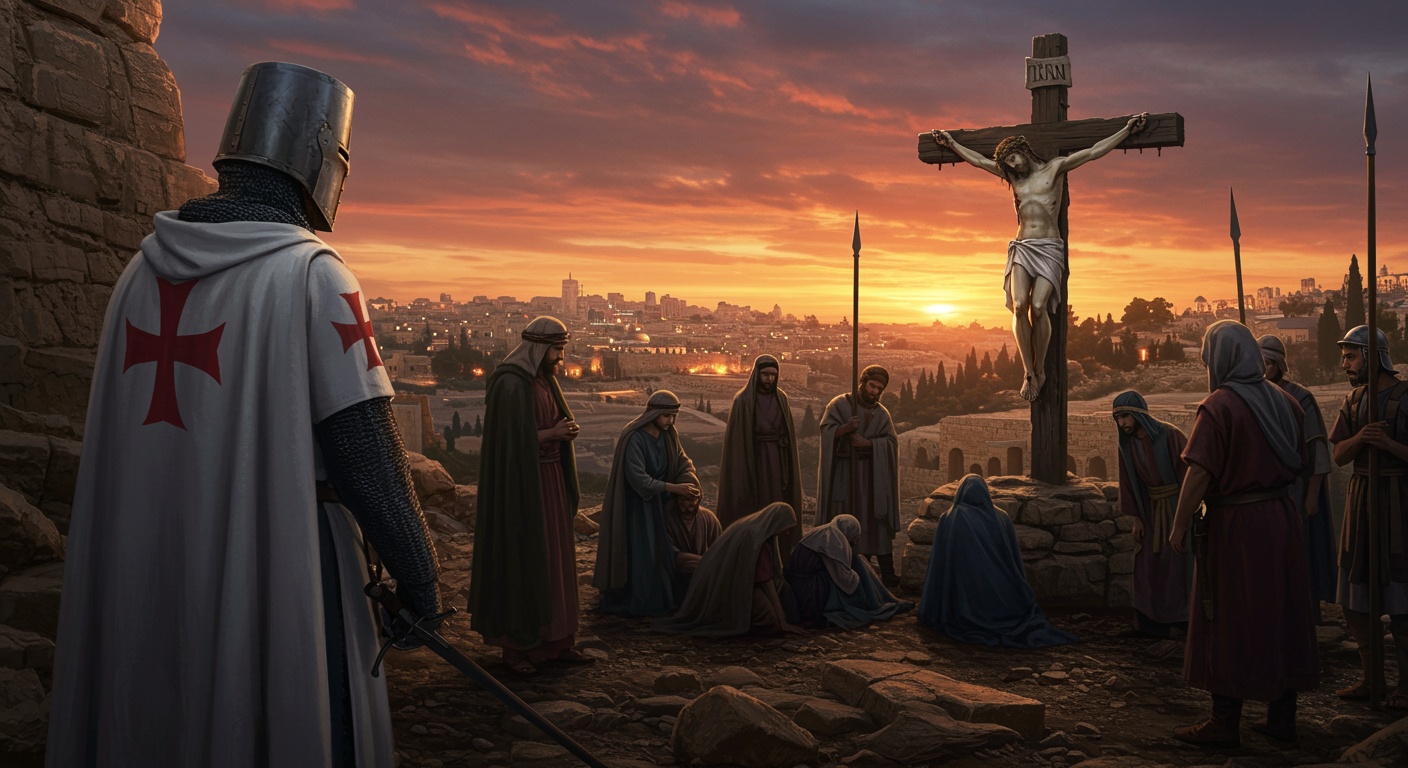
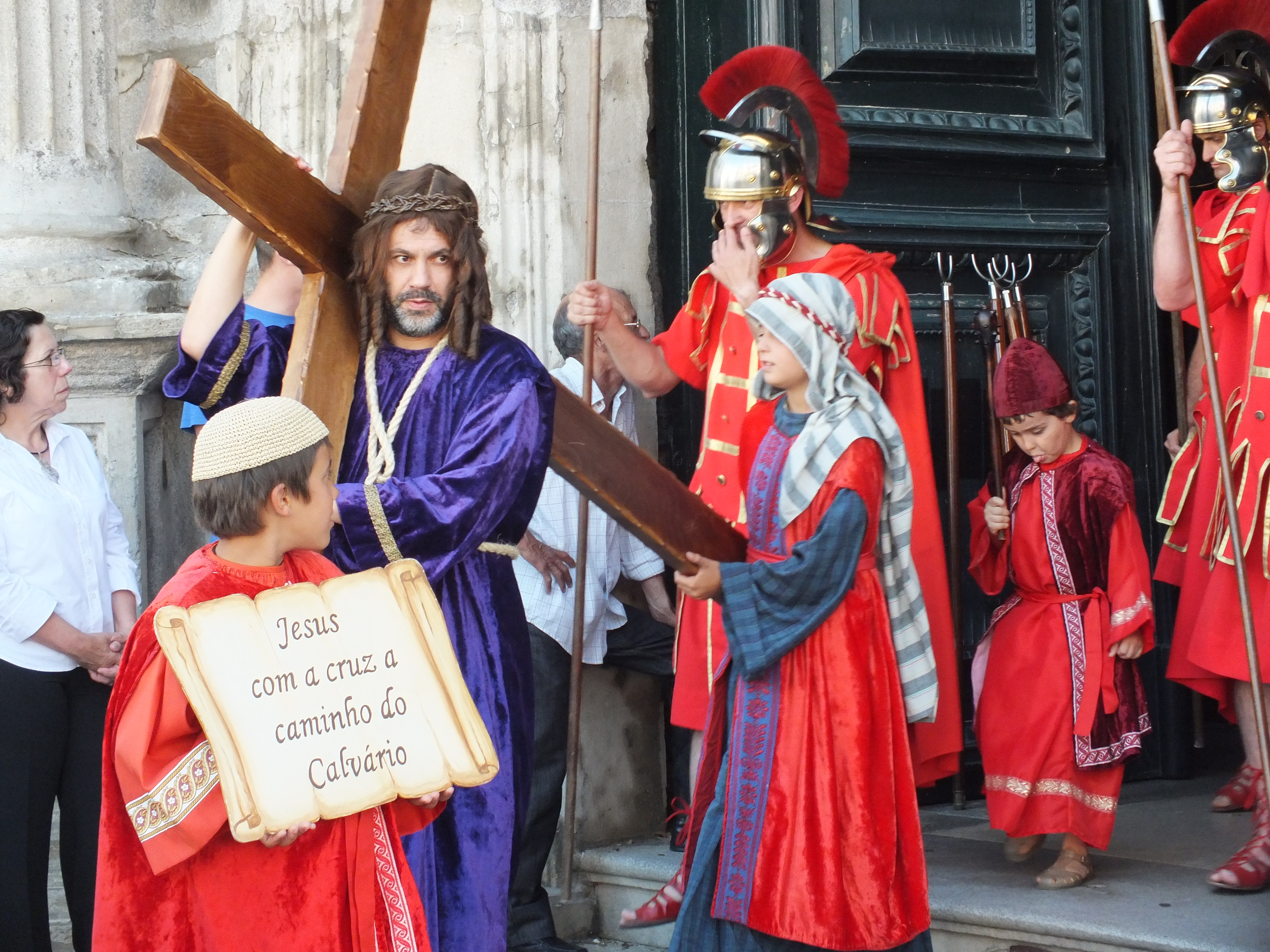
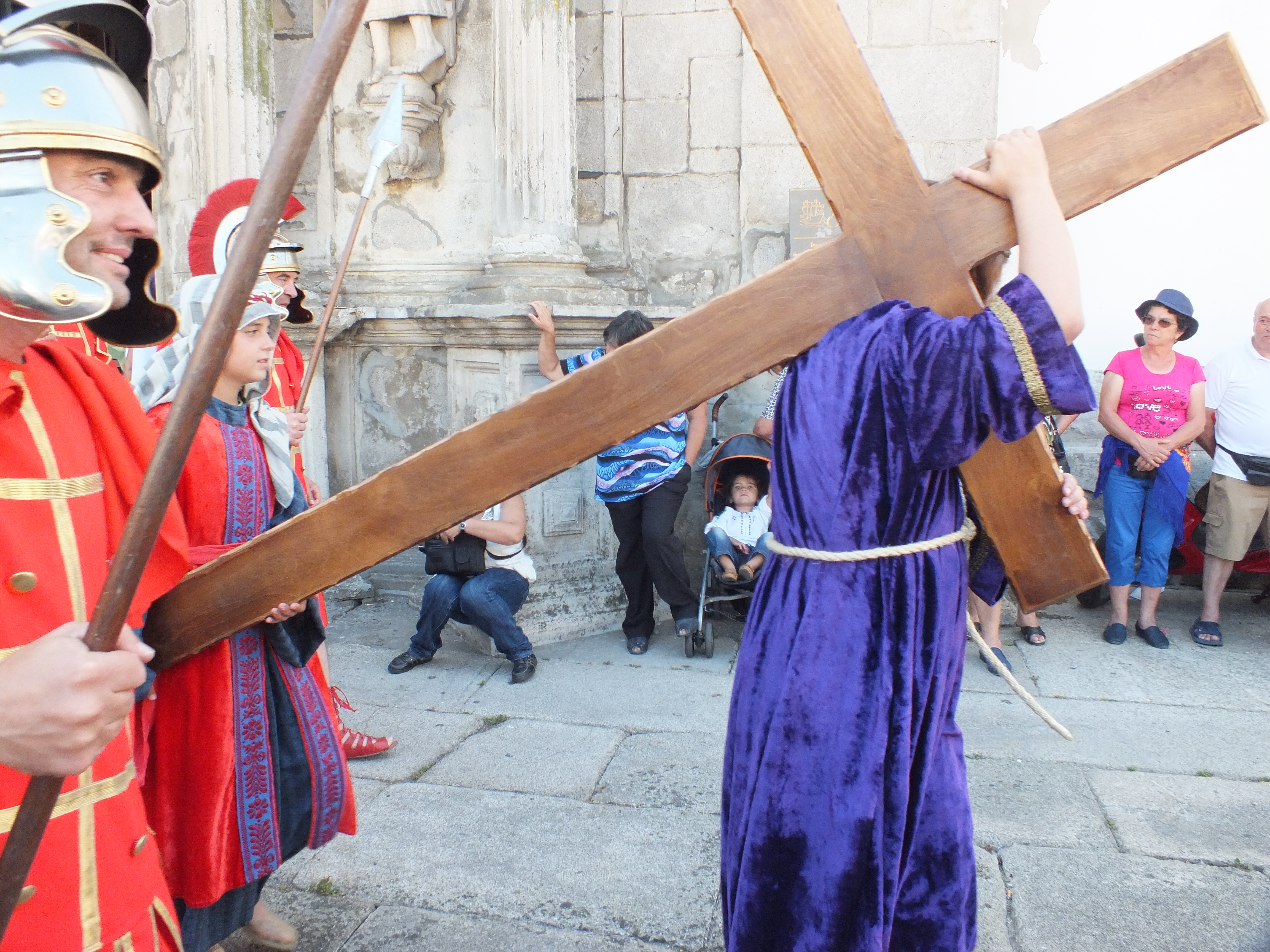
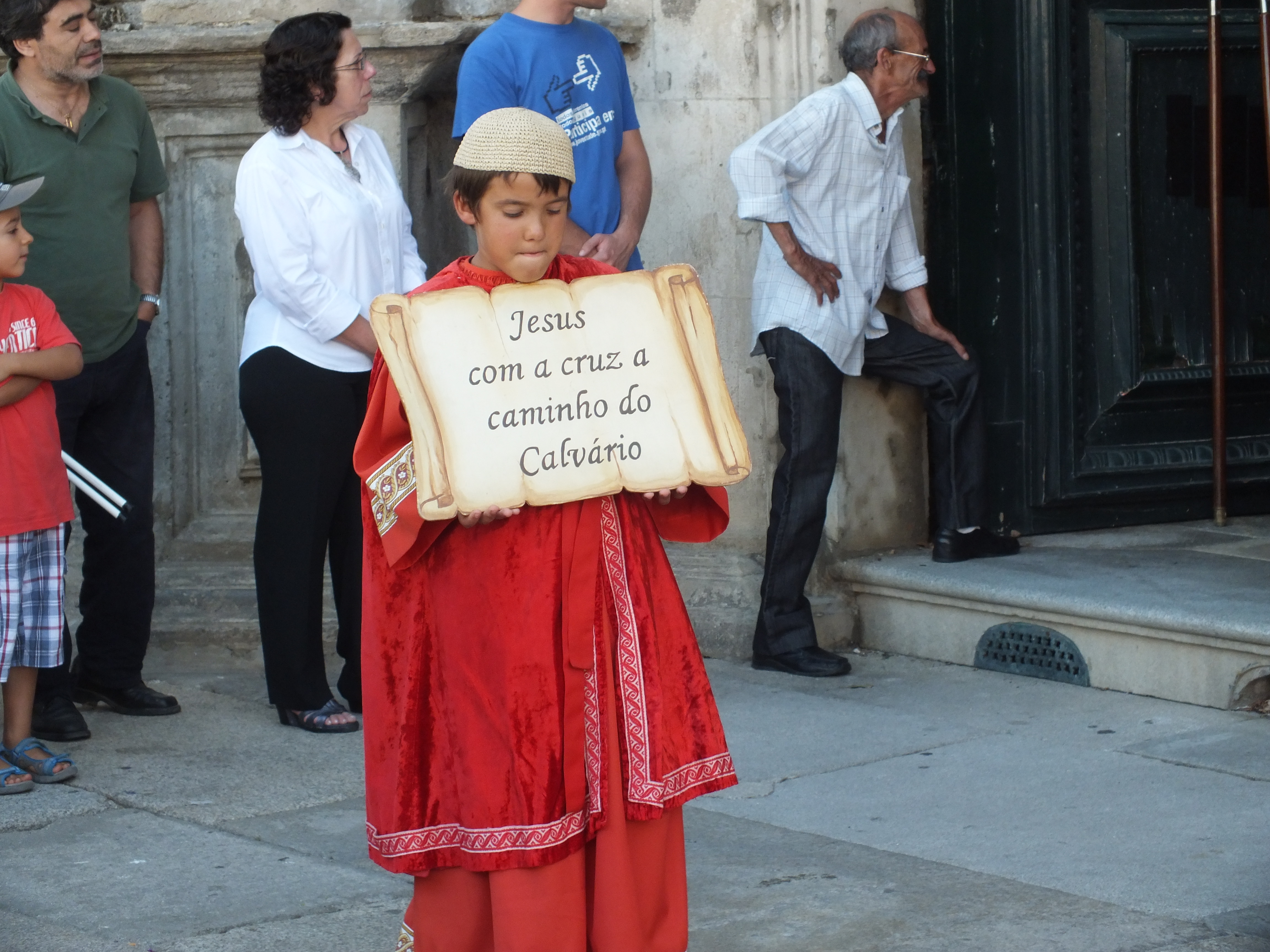
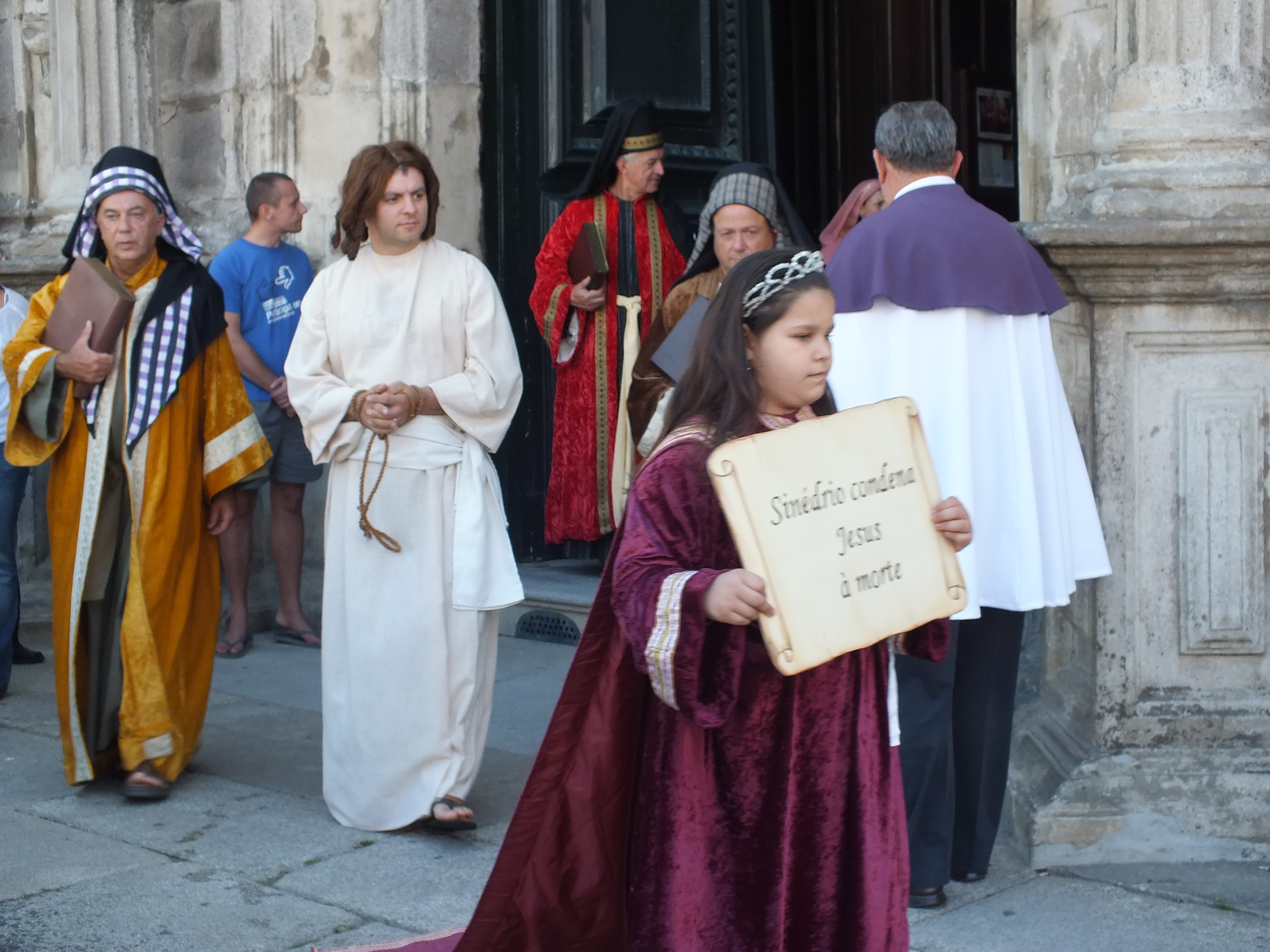
For centuries the crucifixion of Jesus Christ has been acted out in so-called “passion plays”. Below, I share images from a festival in the northern Portuguese town of Viana do Castelo where Jesus (an actor of course) carries his cross to a local church. These kind of public displays of the death of Christ have always been popular. It is, after all, such a visual event – if rather horrific.
Passion Plays aim to recreate the events of the Passion of Jesus, which includes his arrest, trial, and crucifixion, all within the historical context of Roman occupation in Jerusalem. They seek to portray the crucifixion realistically, including the suffering and agony of Jesus. The festival in Viana do Castelo is called Our Lady of Agony – so it also focuses on the Seven Sorrows of Mary. In case you didn’t go to Catholic school, let me list her seven sorrows here:
- The Prophecy of Simeon: When Jesus is presented in the Temple, Simeon prophesies that a sword will pierce Mary’s own soul as well.
- The Flight into Egypt: The Holy Family flees to Egypt to escape King Herod’s order to kill all male infants in Bethlehem.
- The Loss of the Child Jesus in the Temple: Mary and Joseph lose Jesus for three days in Jerusalem, only to find him in the Temple discussing religion with the scribes.
- Meeting Jesus on the Via Dolorosa: Mary meets her son as he carries his cross on the way to his crucifixion.
- The Crucifixion of Jesus: Mary stands at the foot of the cross as Jesus is crucified.
- Jesus’s Descent from the Cross: Mary takes her son down from the cross.
- The Burial of Jesus: Mary witnesses the burial of her son in a tomb.
Passion plays are thought to have developed from liturgical dramas, which were religious plays performed within churches. One example is the “Quem Quaeritis” dialogue, an early dramatic form found in Britain. Some scholars also point to narrative poems, like the “Passion des jongleurs” from the 13th century, as a possible source for the Passion plays of France and Flanders. The “Gall Passion” and the “Frankfort Passion” are examples of early Passion plays, with the latter being more elaborate and requiring a two-day performance.
Passion plays became a key part of the larger Mystery Plays, which were cycles of plays that dramatised the entire Bible. These plays were often performed by city guilds and were a sign of civic pride and prestige.
Public performances of Passion plays were common from the 14th to the 16th centuries, with some continuing into the 17th century. The Passion play of Oberammergau, Germany, is one of the most well-known and has a history dating back to 1634. Enjoy my images from Viana do Castelo below.
If you would like to know more about the Knights Templar, then get your hands on a copy of my book: The Knights Templar – History & Mystery. Published by Pen & Sword and available on Amazon, Waterstones, Barnes & Noble, and WHSmith. Don’t miss out on your copy!