


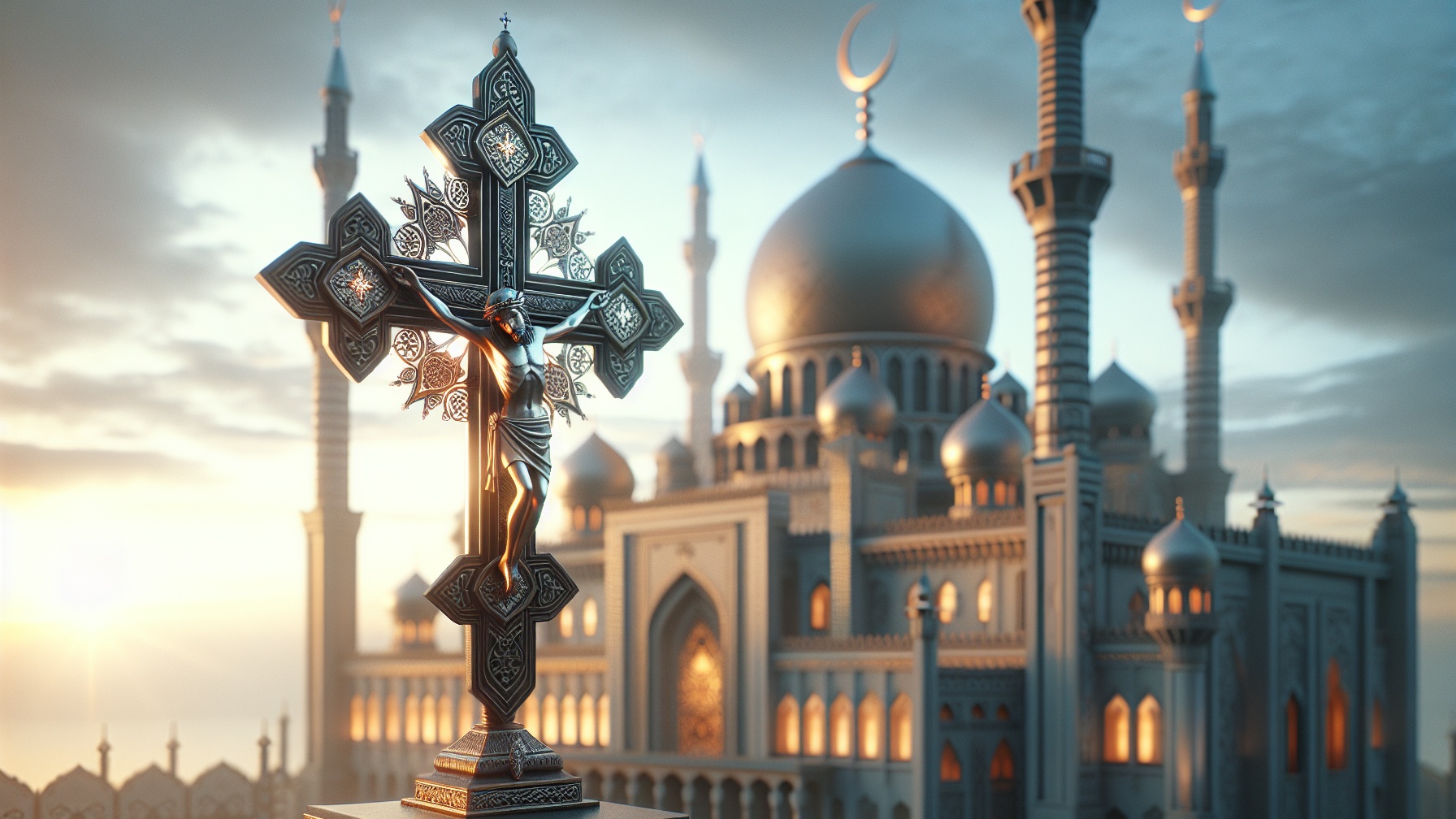
In December 2024, the regime of Bashar al-Assad was overthrown in Syria and the dictator fled into exile. But there are now concerns for the future of Christians – and other religious minorities – who have a long and turbulent history in Syria stretching back to the Crusades and the Roman Empire. What will happen to them? A look back at the Templar period is instructive!
Christians have such a long history in Syria…
If you recall from the New Testament, Saint Paul experienced his sudden conversion to Christianity on the road to Damascus – the same city from which Assad terrorised his people and rebels have now taken control. By the seventh century, Christians were the overwhelming majority of the population under the rule of the Byzantine empire. Though many Syrians did not agree with the emperor’s version of the faith in what was called the Monophysite split in the Christian church.
In the following century, Syria was invaded by Arab armies espousing the new faith of Islam. Damascus became the capital of the Umayyad caliphate and Christians had an uneasy existence. On the one hand, they suffered discrimination but equally were able to find work and some rose to high positions at the caliph’s court. This was inevitable given that Muslims were not the majority for at least a hundred years after the invasion – with some historians estimating that it took until the tenth century for the balance to tip in Islam’s favour.
Christians in the Middle East during the Crusades
One of the most neglected aspects of the crusades is the presence of large Christian communities throughout the Middle East during the Templar period. Some academics believe that it took until as late as the 12th century for Syria and Palestine to be majority Muslim while Egypt still had a majority Christian population into the early 14th century.
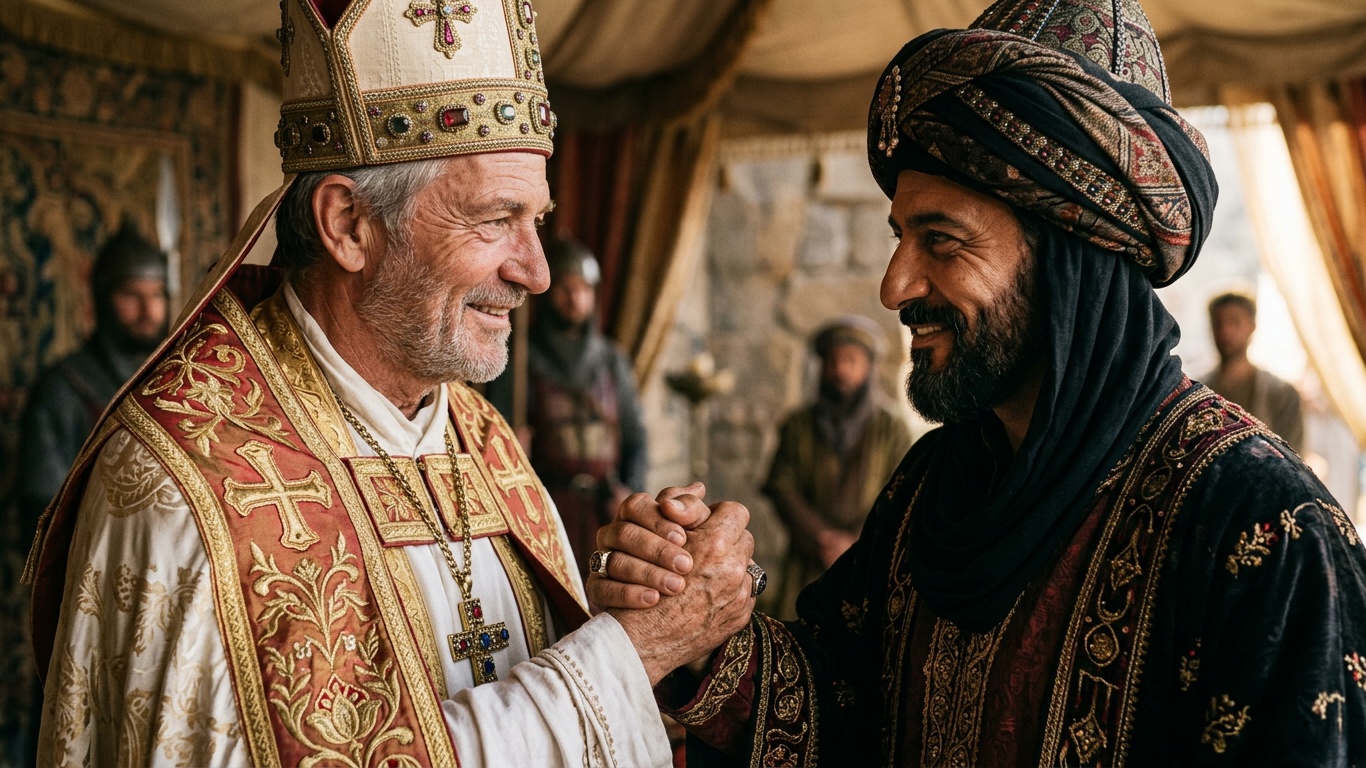
Those dates are disputed but it means you have to get out of your head the idea of western Christian crusaders crashing into an entirely Muslim Middle East. That is not an accurate picture. In fact, it’s rather old fashioned. The crusades ran into a population that much more mixed in terms of religion. There were orthodox Christians, Monophysite Christians, Nestorian Christians, as well as Jews and Muslims. And by the start of the crusades, Muslims had already split into Sunni and Shia variants. So, the Middle East was a very varied place religiously speaking.
Something else to mess with your perceptions of the Templar period is to consider that not only were certain parts of the Middle East still majority Christian during the Crusades but areas of western Europe were majority Muslim in the same period of history. What is now Spain and Portugal – the Iberian Peninsula – had more practising Muslims than Christians in 1100, according to some historians. That is not a universally accepted view.
However, the biggest cities with the largest populations – Cordoba, Seville, Toledo, etc – were part of the Muslim realm. And many people in Spain and Portugal converted to Islam for social advancement; to avoid discrimination; and to not pay the “dhimmi” tax levied on Jews and Christians. The same applies to Sicily, which up to the eleventh century was ruled by a Muslim emir.
Now back to the Middle East…
Christians come under attack in the Middle East – in the 11th century
In the year 1095, Pope Urban II called for a new type of war that would involve westerners heading east to fight for Christ. Why did he demand this? Because, he claimed, Christians in the Byzantine Empire (the Balkans, Asia Minor, and northern Syria) were coming under attack from new Muslim invaders – the Seljuk Turks. This call sparked two centuries of crusades. In 1099, the city of Jerusalem was seized by a Christian army, ending more than four hundred years of Muslim rule.
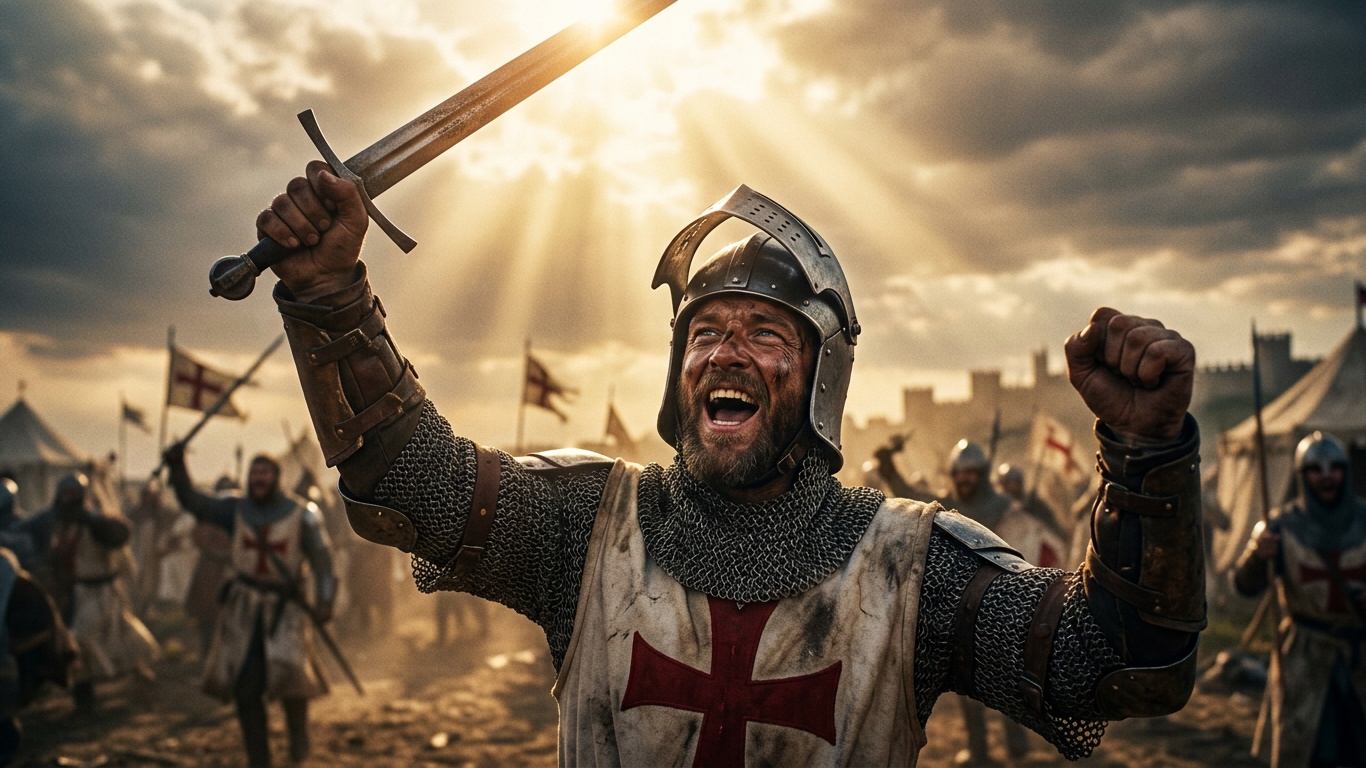
Over two decades later, the Knights Templar were formed ostensibly to protect Christian pilgrims travelling to Jerusalem. If you want to find out what happened next – order a copy of my new history of the Templars, published this month by Pen & Sword. The Knights Templar: History & Mystery is available on Barnes & Noble, Amazon, Waterstones, and other online stores – in hardback. Your reviews will be gratefully accepted – especially on Amazon and Goodreads. Thank you in advance!


This was a very informative write-up. I had no idea how many different interests were actually in the Middle East even at that time. Thanks for posting.