

The Knights Templar were arrested across Europe in the year 1307 leading to their imprisonment, torture, and trials – and eventually executions. France led the way but England also rounded up its Templars. So, what happened to them? Well, it’s a grim story with an unhappy ending.
The Templars were founded in 1118 by nine knights who resolved to defend Christian pilgrims as they journeyed towards Jerusalem – the holiest city in Christendom. Many were robbed and murdered on the roads into the city. The Templars resolved that this would stop.
Over the years, they evolved into something much bigger. The Templar order became the shock troops of the Crusades against the Islamic rulers of the Middle East. Their mission was to ensure that those territories that had been conquered by the crusaders in modern Israel, Lebanon, Syria, Jordan, and Turkey – remained under Christian control.
For two centuries, they were protected by successive popes and created a network of commanderies across Europe generating fabulous wealth to fund their wars in the Holy Land. The knights were governed by a strict Rule of chastity, poverty, and obedience. Their days were a mix of regular prayer and tough military drills. On the battlefield, they struck fear into the Saracens as they thundered forward on horseback wearing their distinctive white mantles emblazoned with a red cross.
Then everything went horribly wrong. They were accused of heresy and sodomy. Templars were tortured into making confessions that included lurid, almost pornographic initiation rituals and Satanic religious practices. In France, the last grand master – Jacques de Molay – was burned to death near Notre Dame cathedral in Paris in 1314. Thus bringing the glorious history of the Knights Templar to an end.
But what happened in England?
England and the Templars
When the English king, Edward II, received a communication from Pope Clement that he must round up all the Templars in his domain on charges of heresy and sodomy – he was incredulous. The king simply couldn’t believe that the knights were guilty of such appalling crimes. As a result, he initially dragged his feet on the matter. In fact, he also wrote to other kings in Europe asking: do you really believe this stuff?
But by degrees, Edward caved in. He issued orders to his officers to arrest all Templars in England, Ireland, and Scotland, and to confiscate and inventory their properties in January 1308. Unlike the harsh treatment in France, the Templars in England were generally treated more leniently. Indeed, the pope complained at one point that the English authorities were housing arrested Templars in comfortable lodgings and refusing to torture them for confessions.
Every Templar province had its own provincial grand master and in England, the last English master was William de la More. He was apprehended at his own commandery at Temple Bruer in Lincolnshire. De la More would spend the next few years behind bars before dying in 1312, just after Pope Clement officially banned the Templars at the Council of Vienne.
When De la More was arrested, the officers couldn’t believe their luck when they found the Templar grand commander of the Auvergne in France, Humbert (or Himbert) Blanc, just happened to be paying a visit to Temple Bruer – and so he was imprisoned too. It’s believed that Blanc had been visiting De la More to plan a new crusade to the Holy Land, believing the Templars could not only clear their reputation, but also resume the war for Jerusalem. That was a complete misreading of the political situation!
The Templars in England were not put on trial until October 1309, by which time some had evaded arrest. Faced with spending time in a dungeon, knights and sergeants just cast aside their uniforms and tried to melt into the population. Meanwhile, Templar lands and assets were handed over to the Knights Hospitaller (who were not banned), though the English crown held onto some Templar assets until 1338.
In both England and Scotland, rogue Templars (who had left the order under a cloud) and non-Templars (often with a grievance against the order) queued up to give dubious evidence. The quality of their testimony didn’t really matter. These legal hearings had already decided on the guilt of the Knights Templar – they just needed to bulk up the damning dossier. Any tittle-tattle would do.
A total of about 108 Templars were interrogated in England but none would confess to the charges of heresy and sodomy. They did admit to their rituals being held in secret and that it was forbidden to leave the order voluntarily – but these rules also applied to the rival Knights Hospitaller and other closed orders. None of this provided solid grounds for burning to death any of these Templars – which was the standard punishment for heretics.
However, several English Templars died after being interrogated by the inquisition. Thomas Thoraldby – nicknamed “Totty” – was imprisoned at Lincoln castle and after one interrogation decided that was more than enough, and escaped. That said, torture was not used to anything like the extent seen in France where Templars were subjected to the strappado, thumbscrews, and the rack.
Even though King Edward II permitted torture to be used on English Templars after December 1309, the inquisitors complained that nobody was stepping forward to do the dirty work. By June 1310, the pope was informed that torture had still not been applied to the Knights Templar in England. Compare that with France where French Templars had been broken in dungeons for nearly three years to get the required confessions. His Holiness was livid.
Only in June 1311, do we get a confirmed report of a Templar called Joseph of Stapelbrugge being tortured in London. Up in York, torture doesn’t seem to have been applied ever. This undoubtedly helps to explain why we see no mass burnings of Templars in England – in contrast to France where on one occasion in 1310, 54 knights were burned together in Paris. No such scenes in London.
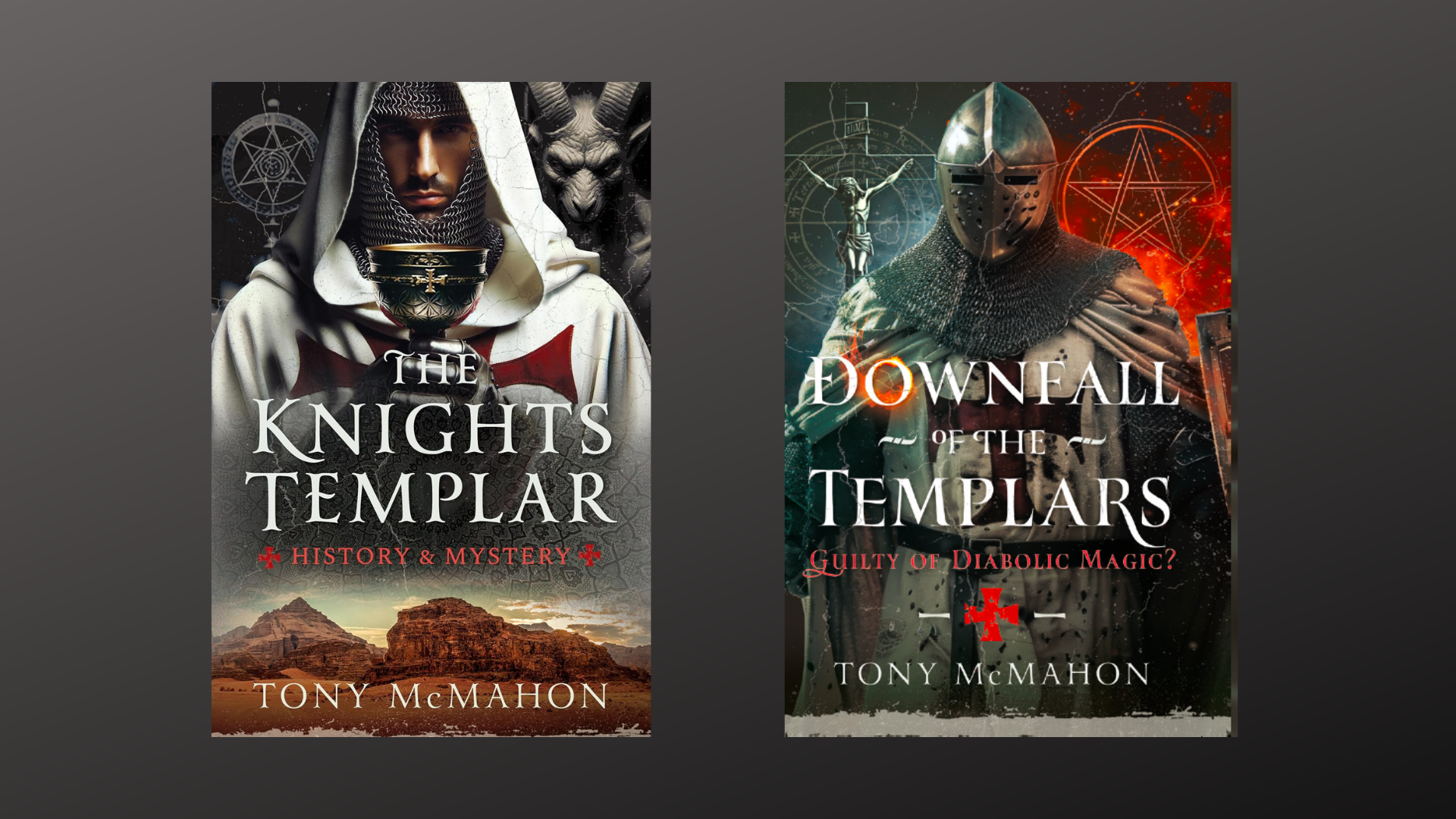
If all of this fascinates – and you want to know more…much more…then get a copy of my book: The Knights Templar – History & Mystery. Published by Pen & Sword and available on Amazon, Waterstones, WHSmith, and Barnes & Noble.

That is actually St. Michael the Archangel delivering souls from purgatory, not judgment day. That is why the souls in the flames are praying. Thanks for the pictures, really cool sculpture.
I stand corrected – thank you!