

Thousands of Templar enthusiasts descend on Rosslyn Chapel every year. It’s a unique feast for the senses with intricate late medieval stonework and the alluring Apprentice Pillar, which resembles a DNA helix. But is there actually any connection between Rosslyn and the Knights Templar?
First of all – here I am (below) outside Rosslyn Chapel. It’s about 30 minutes by taxi, and just under an hour by bus, from the centre of Edinburgh. So, if you’re ever at the annual festival, pay it a visit. There’s no need for advance booking. OK – that’s my plug for Rosslyn done, now let’s get on with the history and mystery.

Rosslyn Chapel was founded in 1446, which is 134 years after the Knights Templar were officially banned by Pope Clement V at the Council of Vienne in 1312. However, for reasons I’ll explain, many believe they continued to exist and there is a Templar connection with the chapel.
The founder of the chapel was Sir William St Clair (also spelt Sinclair) and this family has become heavily associated with esoteric theories about the Templars, especially in recent decades. Several books have fed the Sinclair/Templar connection – most infamously The Holy Blood and The Holy Grail by Henry Lincoln, Michael Baigent, and Richard Leigh and the Dan Brown bestseller novel, The Da Vinci Code – later made into a hugely successful movie.
Sir William’s original ambitious plans for Rosslyn were scaled back by his son, Oliver, and you can see that the building is essentially stunted. It was clearly meant to be part of something much grander. The typically medieval motive for constructing the chapel was for prayers to be said in perpetuity for the souls of the deceased Sinclairs.
However, along came the Protestant Reformation in the 16th century and Rosslyn fell into disrepair. It was used as a stable by Cromwell’s troops and then boarded up and forgotten. Ironically, this turned out to be a godsend. Because whereas other churches had their ornamentation savaged by puritans, Rosslyn retained its twiddly stonework and curious carvings.
During the Gothic revival of the Victorian period, along came 19th century restorers with their idea of what a medieval church should look like. On balance, they didn’t inflict too much damage on Rosslyn. But the damp Scottish weather took its toll on the building and in the 1950s some appalling restoration was done, involving copious amounts of cement. This was put right in the 1990s, giving us the Rosslyn we see today.
The Apprentice Pillar and Musical Boxes
One slightly jarring feature in the chapel is the so-called Apprentice Pillar, pictured below. Thick vine-like plants circle the pillar with eight dragons at the base. Its resemblance to a tree has led many to conclude that it’s supposed to be the Tree of Life – an element in pre-Christian mythologies. In Norse myths, it is called Yggdrasil, at the base of which a dragon called Niðhöggr gnaws at its roots. This may be a nod to the Viking roots of the Sinclairs who were of mixed Norse and Scottish ancestry.
The reason it’s called the Apprentice Pillar is that it was allegedly built by an apprentice mason – normally a boy in his mid-teens – who took it upon himself to fashion the pillar while the master mason, his teacher and boss, was away in Europe looking for ideas and inspiration for the chapel. Once the master mason returned from his travels, he flew into a jealous rage at this stunning achievement and murdered the apprentice.
For this heinous crime, the master mason was put on trial and hanged. But the other stone masons felt that his soul should be tormented for all eternity. So if you look at the other end of the chapel, you can see the head of the young apprentice with a gash on his forehead, set high in the nave. Opposite him, condemned to stare forever at his foul deed, is the master mason.
This story reeks of Masonic folklore and suggests a long connection between the Freemasons and Rosslyn.

Nearby, gaze upwards and you will see rows of stone cubes decorating the arches that some argue are musical notes. It’s a headache to explain this but in short, they are all different. Each one represents the pattern made by a note on a two-dimensional surface. To see that “Chladni” pattern, you would spread a powder of some description on the surface. As the note is played, the vibration forms the pattern. Hope that makes sense!

None of this leads us to a Templar connection. To do that, we must make several leaps of faith. Let me bullet point them below.
Rosslyn and the Templar connection
Let’s structure this Rosslyn Templar connection theory from different sources:
- In 1307, the Knights Templar are arrested across France. But just in time, with advance knowledge of those arrest warrants, they spirit their treasure away from the port of La Rochelle. Their ships sail for Scotland.
- King Robert the Bruce has been excommunicated by the pope and, together with Scottish nobles and stone masons, gives shelter to the fleeing Templars. Any enemies of the pope – are friends of Robert. In return, they help the king win the Battle of Bannockburn against the English in 1314.
- In the 18th and early 19th century, Freemason writers developed the idea of a link between the Masons and the crusading military orders, particularly the Templars. Over time, this mythology came to be regarded as fact, not just by many Freemasons – but by many non-Masonic esoteric historians.
- Stories also emerged of a relationship between the Sinclair family and the Templars that went right back to the earliest years of the order – and the First Crusade.
- It’s then argued that Sir Henry Sinclair, in 1398, journeyed to north America with a group of undercover Templars, landing in Nova Scotia. They discovered the New World a hundred years before Christopher Columbus. Evidence of this can be discerned in certain carvings at Rosslyn chapel that resemble crops only to be found in the Americas in the 15th century – for example, maize.
- It’s also been stated that some stone mason markings on the wall of the underground sacristy at Rosslyn Chapel actually constitute a map, leading the way to the New World.
- Others believe that the Templars buried their treasure underneath Rosslyn – including the Holy Grail, Ark of the Covenant, and either the embalmed head of Jesus or John the Baptist.
In Dan Brown’s Da Vinci Code – the Holy Grail is the bloodline of Jesus, from his marriage to Mary Magdalene, and this is where the sacred lineage has been protected. And with all of the above, you have your Templar connection.
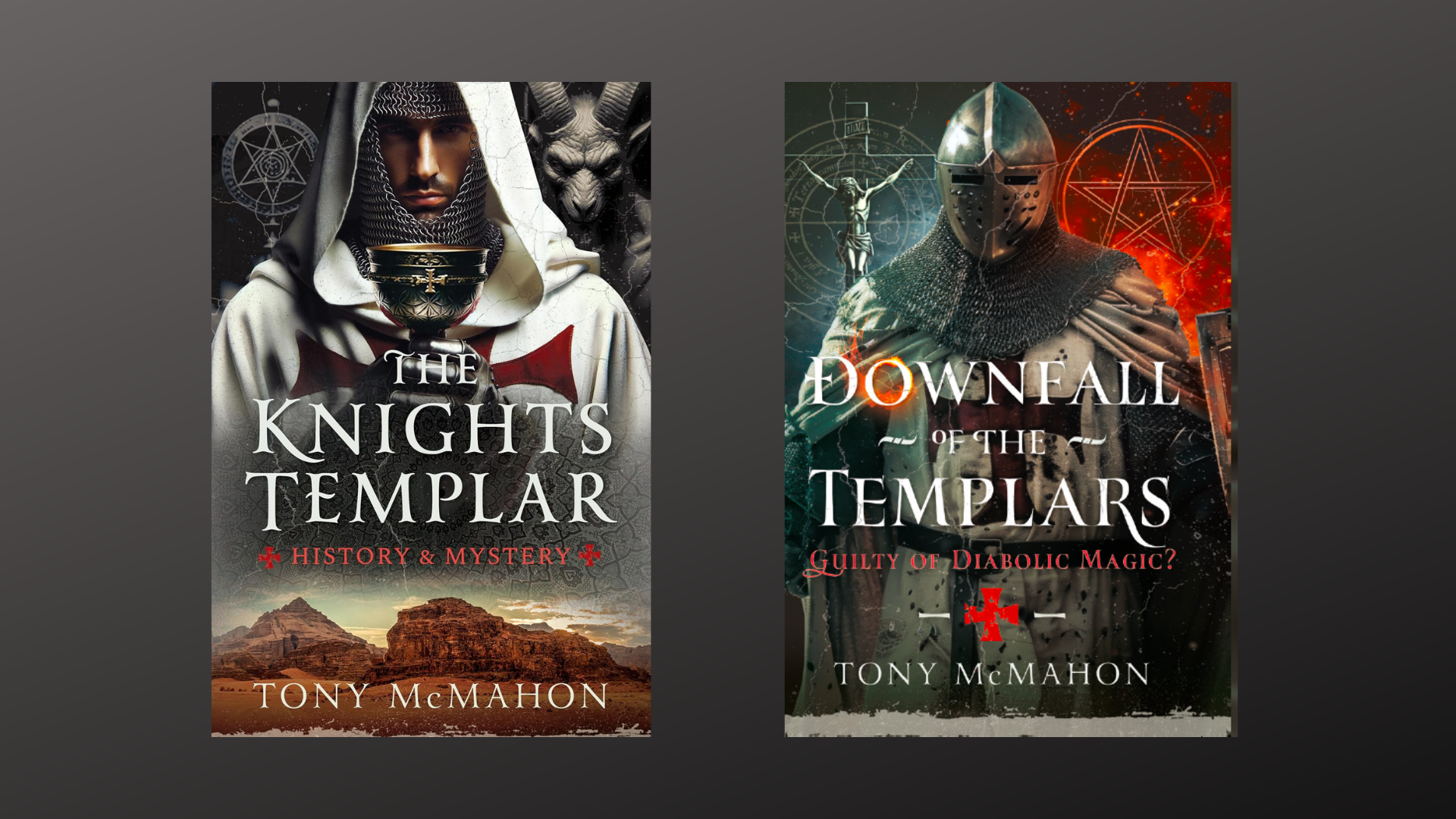
If you would like to know more about the Knights Templar, then get your hands on a copy of my book: The Knights Templar – History & Mystery. Published by Pen & Sword and available on Amazon, Waterstones, Barnes & Noble, and WHSmith. Don’t miss out on your copy!

One thought on “Rosslyn chapel – the Templar connection”