


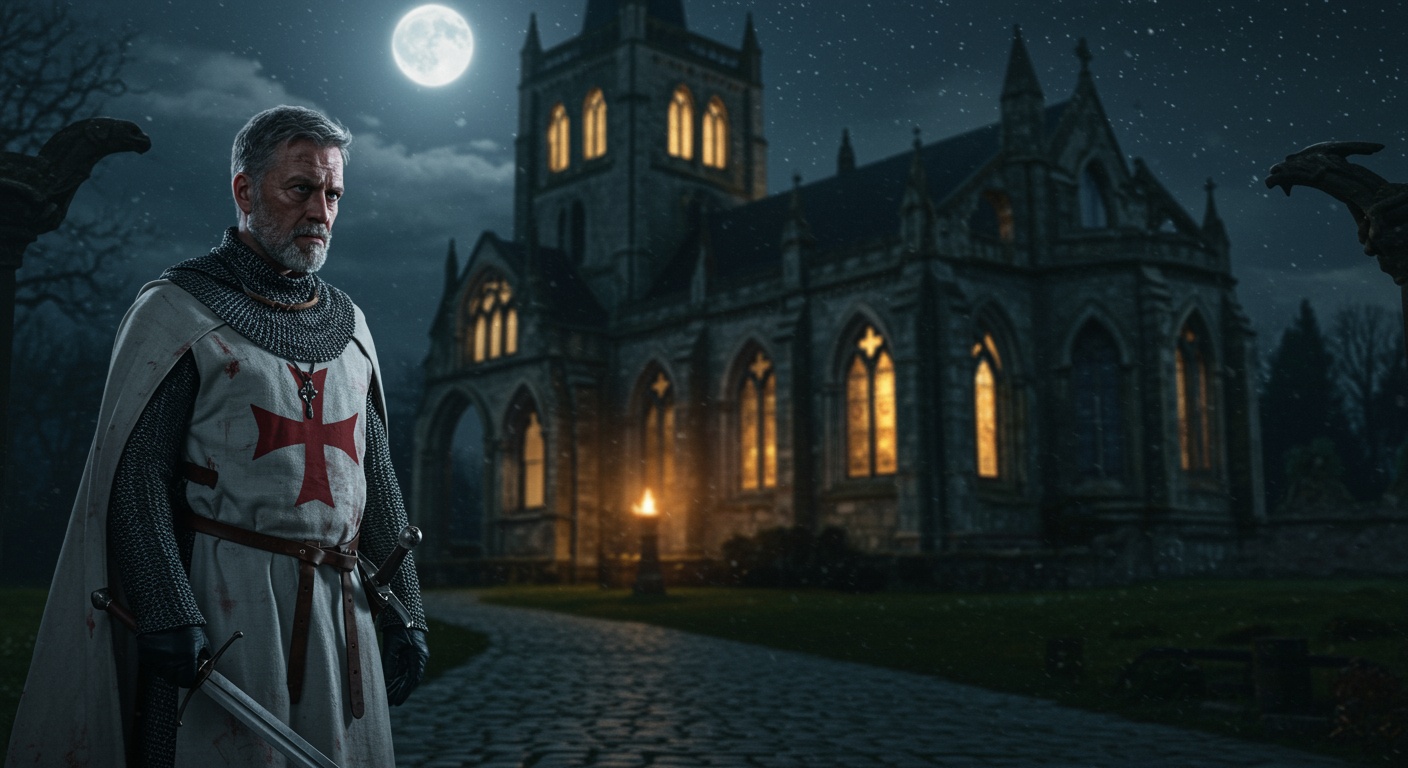
Leicester was an important medieval city. It was built around the remains of the earlier Roman occupation and you can see a blend of Roman and medieval in certain buildings. The town’s infrastructure, including the layout of streets and property boundaries, was significantly influenced by the surviving Roman structures. So, let me take you to Leicester!
Leicester is the largest city in the East Midlands. It was originally a Roman town (Ratae Corieltauvorum), and experienced periods of invasion and influence from various peoples, including Saxons, Danes, and Normans.
The 12th and 13th centuries saw significant growth and development, including the construction of new buildings like friaries and Leicester Abbey, as well as the enlargement of existing structures. The town’s merchants formed a Guild, which played a crucial role in regulating trade, maintaining quality standards, and supporting the community. Notable structures built during this period include Bow Bridge (c. 1350), John O’Gaunt’s Cellar (1353), Leicester Guildhall (1361), The Blue Boar Inn and The High Cross (1400).
The city of Leicester is based in the county of Leicestershire and the Knights Templar had a preceptory at Rothley Temple. This was founded around the year 1231. The manor and church were granted to the order by King Henry III and their lands eventually extended to thirteen Leicestershire villages. King Edward I allowed the Templars to hold a weekly market at Rothley and an annual fair in honour of Saint Barnabas in the month of June.
King Richard III spent his last days in Leicester before his death at the Battle of Bosworth and was buried there in 1485. His body was discovered under a car park in 2012. DNA testing proved it was him. The skeleton was found in a hasty grave, exhibiting a curved spine and battle injuries, characteristics consistent with the accounts of Richard III’s life and death. The University of Leicester’s forensic team, including DNA experts, used various scientific methods, including DNA analysis, radiocarbon dating, and osteological analysis, to confirm that the skeleton was indeed Richard III.
In the 1530s, the Dissolution of the Monasteries led to the closure and destruction of several monastic institutions, including Leicester Abbey, and significantly impacted the town’s religious and social structures.
I’ve visited Leicester on several occasions and finding the medieval part of the city can be challenging given the unfortunate road layout, which has separated it from the town centre. When you do find it, one of the most interesting features to encounter is a thick, brick section of wall rising thirty feet high, known as the Jewry Wall. It actually has nothing to do with the city’s Jewish population. Georgian and Victorian historians completely misinterpreted this structure. They thought it might be a temple to the god Janus or a city gate. It’s neither. The wall is part of a Roman bath complex, long gone of course.
So why was it called the Jewry Wall? Especially as Leicester’s Jewish population was expelled by Simon de Montfort in 1231. It’s now thought the term is a corruption of the word ‘jurat’ – these were the senior politicians in the medieval era who held their council meetings near the wall.
Next to the wall is a church to Saint Nicholas. I walked in and was immediately confronted by two windows in the nave that looked very Roman. In fact, they date to the Saxon period – around 880AD. But the masonry was part of the original Roman bath and was simply transplanted into the church – by the looks of things, mimicking the original positioning.
It’s a strangely laid out church with a Norman tower and some questionable changes made in the early nineteenth century when a wall of the nave was demolished and replaced by a brick arch. The church authorities actually wanted to demolish the entire church but didn’t have the funds.


If you would like to know more about the Knights Templar, then get your hands on a copy of my book: The Knights Templar – History & Mystery. Published by Pen & Sword and available on Amazon, Waterstones, Barnes & Noble, and WHSmith. Don’t miss out on your copy!





A great piece!
History is truly amazing!