

Most people would assume that during that almighty conflict between Christianity and Islam, known as the Crusades, there would be no Arab figures admired in Europe – and yet there were. Great warriors like Saladin and philosophers like Avicenna and Averroes were held in high esteem. So, how could that have happened?
It must be said at the outset that many Christian writers characterised the Arab world as something alien, violent, and immoral. But with many westerners coming into direct contact with the enemy in the Middle East, views became more nuanced – even positive on occasion.
The classic example of an Arab seen favourably by western writers is Saladin (full name – (Salah ad-Din Yusuf ibn Ayyub). He was described by William of Tyre, the leading chronicler of the crusades, as having “a keen and vigorous mind, valiant in war and generous beyond measure”. Though William suspected that Saladin had murdered a political rival, the sultan of Egypt, by clubbing him to death with his own hands.
There were two great princes in the Third Crusade. Richard the Lionheart on the Christian side and Saladin on the Muslim side. Reportedly, the Bishop of Salisbury made the grovelling remark to Saladin that “if one combined your [Saladin’s] qualities with his [Richard’s] then nowhere in the world would two such princes be found”.
His name reverberated through Europe when he beat the Crusaders at Hattin in 1187, retook Jerusalem, and then — crucially for his western reputation — treated the defeated Christian population with restraint, in pointed contrast to the massacre the First Crusaders had inflicted on Jerusalem’s population in 1099.
DISCOVER: Battle of Hattin – disaster for the Templars
His conduct led him to become the template for the “noble Saracen” trope in European literature. The poet Dante, in describing the torments of hell, placed Saladin in limbo – the place for virtuous pagans – and not in the inferno, where outright sinners were cast.
Rashid ad-Din Sinan, the “Old Man of the Mountain,” leader of the Syrian Nizari Ismailis (the “Assassins”), was arguably the second most famous Arab in western Europe — though notorious for the murderous conduct of his followers rather than chivalry.
Crusader chroniclers like William of Tyre and later Marco Polo spun increasingly lurid legends about him: a hidden mountain fortress, hashish-intoxicated youths, gardens of paradise used to manufacture fanatical killers. Almost none of it was accurate, but it entered European consciousness so thoroughly that “assassin” became an English word.
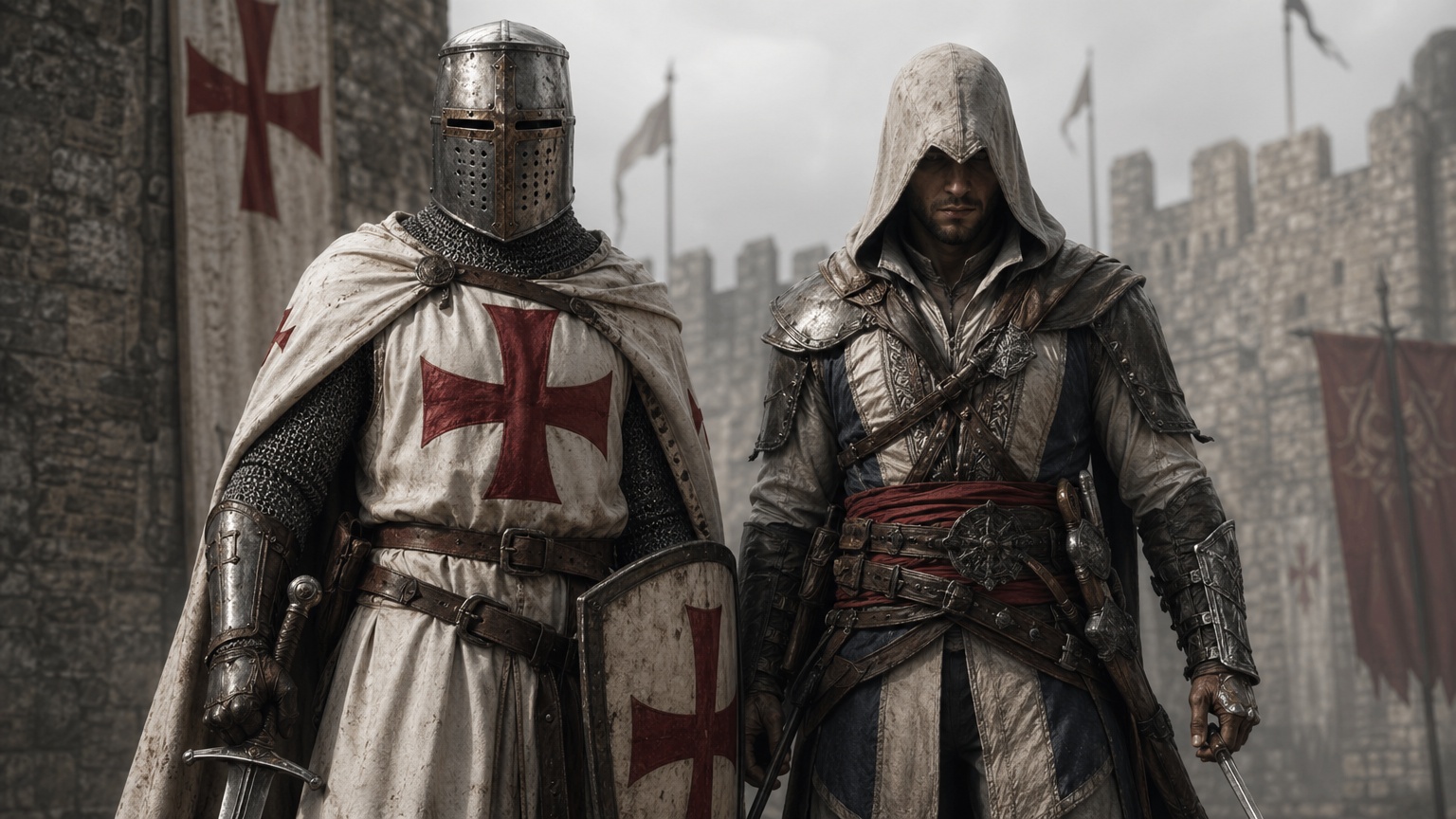
He may not have been admired as such (though some may have been in awe of his methods), but he was certain well known. And of course, in a bizarre modern twist, his death cult has become the heroic side in the popular video game, Assassin’s Creed.
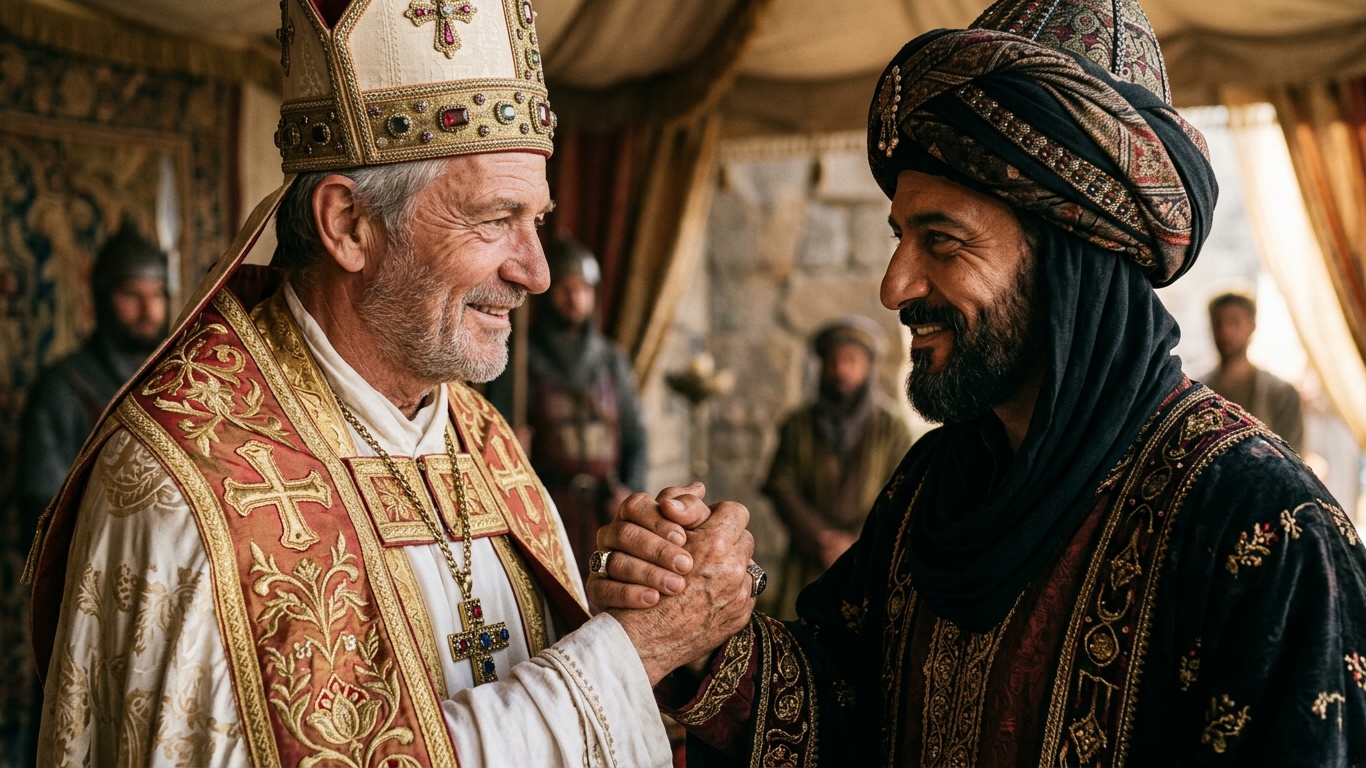
Al-Kamil, the Ayyubid sultan (Saladin’s nephew) who met Francis of Assisi during the Fifth Crusade in 1219, gained a more modest but persistent western reputation — remembered for receiving Francis with courtesy rather than executing him, which fed the same “surprisingly honourable Muslim ruler” narrative that Saladin had established.
Baibars, or Baybars if you prefer that spelling, by contrast, despite being arguably more militarily consequential than Saladin (he crushed the Mongols at Ain Jalut and rolled back the Crusader states far more decisively), never achieved comparable fame in Europe — he was Mamluk rather than Ayyubid, came a generation after the “golden age” of Crusader chronicling, and didn’t offer Christian writers the same redemptive chivalric narrative to work with.
Several of the era’s other famous “Arab” names in European eyes were philosophers, not warriors — Averroes (Ibn Rushd) and Avicenna (Ibn Sina, though Persian rather than Arab) were towering figures in Scholastic Europe, cited constantly by Aquinas and Dante (who puts Averroes in Limbo too, as “he who made the great commentary”).
You will be aware that I’ve been writing a trilogy of books on the Knights Templar in recent years and the third book – on the alleged connection with the freemasons – is now available for pre-order on Amazon, Barnes & Noble, and Waterstones. Make sure to get your copy pre-ordered now.